
Check the limits before choosing a phone deposit
 Available in US
See how Boku works through mobile billing, what can restrict deposits and why you need a separate plan for withdrawals.

How Pay-by-Phone Casino Deposits Work
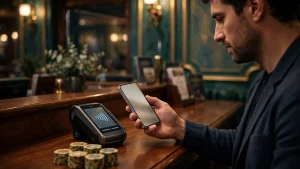
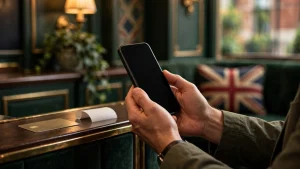
A Boku deposit begins inside the casino account, not in a separate payment app. After signing in, the player opens the cashier or deposit page and selects Boku from the methods displayed. The choice matters: a casino may offer more than one Pay by Phone service, and selecting another provider would start a different payment flow. The method must appear in that account’s cashier for the transaction to proceed.
The cashier then asks for a deposit amount and a mobile phone number. The amount is selected from the options shown, rather than typed in freely in every case. A specialist review reports Boku deposits in amounts divisible by ten, with examples including £10, £20 and £30. That denomination detail should not be treated as a universal promise: the cashier’s available options determine what can be entered for a particular deposit.
The phone number links the payment request to the mobile account that will be billed. It therefore needs to be entered accurately and should belong to the person making the deposit. Boku routes the charge through the mobile network operator; it is not a debit-card payment entered into the casino cashier. The resulting casino deposit is funded through the phone account, with the charge appearing on the mobile bill.
Pay n play options can differ in their terms and cash-out arrangements, so it is worth checking the details before choosing a casino. This list provides a concise reference point for considering the options on this page.
-
Britsino
- Payout speed
- 1-3 business days
Britsino lists a payout speed of 1–3 business days. This gives readers a stated timeframe to consider when reviewing its cash-out arrangements.
-
Amunbet
- Payout speed
- 1-3 business days
Amunbet lists payouts as taking 1–3 business days. That stated timeframe may help readers assess its cash-out arrangements.
-
Dieselwin
- Payout speed
- 1-3 business days
Dieselwin gives a payout speed of 1–3 business days. Readers can use this as a reference when checking its terms.
-
BeOnBet
- Payout speed
- 1-3 business days
BeOnBet lists a payout timeframe of 1–3 business days. This is the available detail to consider when reviewing its cash-out arrangements.
-
Jetsetspins
- Payout speed
- 1-3 business days
Jetsetspins states that payouts take 1–3 business days. Readers looking into its cash-out arrangements have a stated timeframe to refer to.
-
SpinFormula
- Payout speed
- 1-3 business days
SpinFormula lists payout processing at 1–3 business days. This provides a stated timeframe for readers to factor into their review.
-
Revery Play
- Payout speed
- 1-3 business days
Revery Play gives a payout speed of 1–3 business days. This is a useful detail to check alongside its terms.
-
WinBeast
- Payout speed
- 1-3 business days
WinBeast lists payouts as taking 1–3 business days. Readers can take this stated timeframe into account when reviewing its cash-out arrangements.
-
Chanze
- Payout speed
- 1-3 business days
Chanze states a payout speed of 1–3 business days. This gives readers one concrete detail to consider when checking its terms.
-
Zombillion
- Payout speed
- 1-3 business days
Zombillion lists a payout timeframe of 1–3 business days. Readers can refer to this stated detail when reviewing its cash-out arrangements.
After the amount and number are submitted, the payment flow sends an SMS verification code to the phone. The player enters that code in the confirmation screen to authorise the transaction. This SMS step is the point at which the mobile account holder confirms the request. If the code is not entered, the payment has not completed through the described confirmation process. A successful approval allows the casino to process the deposit.
The sequence is therefore: select Boku in the cashier, choose an available amount, enter the mobile number, then confirm the request with the SMS code. It is distinct from a pay n play arrangement in which registration and payment may be combined through a different service. With Boku, the payment method is selected within an existing casino account’s cashier; the steps described here concern funding that account.
Before entering payment details, the casino’s identity and licence status remain separate checks from the payment flow. Online casinos serving the British market must hold the relevant UK Gambling Commission licence. The licence number can be checked on the Commission’s public register before money is deposited. Seeing Boku in a cashier does not establish that the operator is licensed, just as a licence does not guarantee that Boku will be available to every account.
 Casinos that accept PayPal in the UK: terms to checkLearn how PayPal deposit eligibility affects casino bonuses, including a reported £100 match cap and 35-times wagering, and why payment terms need…
 Solana Casinos in the UK: What Can Be VerifiedLearn why a casino’s game catalogue or crypto label cannot confirm Solana deposits, and why its UK cashier is the relevant place…
The screen may vary between casino operators, but the core actions remain recognisable: a cashier selection, an amount, a mobile number and SMS confirmation. The phone is required because Boku sends the charge through the mobile network, and the confirmation code is delivered to that number. That makes the process different from paying by card directly at checkout, while leaving the mobile bill as the route by which the deposit is charged.
Which UK Casinos Still Take Boku—and Why the Choice Is Narrow
Direct Boku deposits have become a limited feature of the UK casino market. Specialist casino reviews describe a small group of UK Gambling Commission-licensed sites that still list Boku, with Jackpot Mobile Casino and Peachy Games among the identifiable examples. That is a narrower choice than the wider range of casinos that once offered phone-bill funding, and the position can change as operators revise their cashier options.
A name appearing in a review is not a guarantee that Boku will be available to every account. Payment methods can depend on the operator’s current arrangements and the customer’s circumstances. The useful distinction is between a casino that supports Boku as a direct deposit option and one that offers another Pay by Phone service, or no phone-based payment at all. The label “Pay by Phone” can cover different services; Boku should not be assumed to mean every mobile payment option displayed in a cashier.
There has been no UK Gambling Commission rule specifically prohibiting casinos from accepting Boku. The change has been an operator decision: individual businesses have removed the method because of compliance risk. That distinction matters. A disappearing cashier option does not mean the regulator named and banned Boku; it means operators have weighed the method against their own regulatory obligations and chosen whether to keep it.
The Commission’s role is broader than approving individual payment brands. It licences businesses offering remote gambling to people in Great Britain, even when the operator’s key equipment is located elsewhere. A casino serving this market must hold the relevant operating licence. The payment provider does not replace that requirement, and the presence of Boku in a cashier is not itself evidence of a casino’s licensing status. Licence checks remain a separate part of assessing where an account is held.
Why the direct-Boku list has contracted
Specialist reviews chart a retreat from Boku since 2023. Operators have shifted towards Fonix or Siru Mobile, while others have removed Pay by Phone options altogether. The pattern is not a single market-wide switch: one casino may replace Boku with a different phone-payment provider, while another may leave the category behind. As a result, a search for casinos that accept Pay by Phone can return sites that do not accept Boku specifically.
Compliance risk is the stated reason for operators’ withdrawals, but that should not be converted into a claim that Boku itself is unlawful or that every operator faced the same issue. The regulator did not issue a Boku-specific ban. Rather, operators made their own decisions about whether retaining the payment route fitted their compliance approach. The practical outcome is still clear: fewer direct-Boku options, without a formal prohibition on the method.
 Casinos That Accept UpayCard UK: What to CheckLearn how to verify the cashier’s payment route, check whether deposits qualify for bonuses, and review withdrawal and return-to-source rules.
 UK Casinos and Apple Pay: What Payment Evidence ShowsLearn why Boku and other Pay by Phone deposits do not confirm Apple Pay acceptance, and why deposit and withdrawal options must…
That contraction also makes older lists unreliable. A casino named in a past comparison may have changed its payment menu since publication, and an operator can continue to support mobile payments while no longer accepting Boku. A review that groups Boku, Fonix and Siru Mobile under one broad “mobile payment” heading may therefore overstate the number of casinos that accept Boku itself. The provider name, rather than the general payment category, is the relevant detail.
The remaining direct-Boku group is small enough to identify, but not large enough to treat every Pay by Phone casino as interchangeable. Jackpot Mobile Casino and Peachy Games are cited in specialist reviews as examples within that group. Their appearance in such reviews is a snapshot of reported availability, not a permanent undertaking by the operator. The payment page at the time of registration is the practical check; a general statement that a casino supports phone payments does not settle which service it currently accepts.
What “Pay N Play” means in this context
Some searches use “Pay N Play” as a broad label for quick casino deposits, while the payment method covered here is Boku, charged through a mobile network. Those terms should not be treated as proof that a casino offers the same mechanism. The relevant question is whether Boku is named as a direct deposit option, rather than whether the site advertises a fast sign-up or a general mobile payment facility.
The distinction matters when comparing casino apps as well as desktop sites. An app may provide access to the same account cashier, but the presence of an app does not establish that Boku is supported. Nor does a casino’s acceptance of another Pay by Phone provider establish that it accepts Boku. The payment brand needs to be stated explicitly before the option can be counted as direct Boku.
Searches that combine Boku with bitcoin casinos or casinos outside GamStop raise separate questions from payment availability. A payment method alone does not establish a casino’s regulatory status, and a casino should not be treated as suitable for the British market merely because it accepts a particular form of payment. For real-money gambling offered to consumers in Great Britain, the operator must hold a UK Gambling Commission licence. The regulator’s public register provides the means to check that status before depositing.
The distinction is particularly important where a site’s marketing uses a familiar payment name to suggest legitimacy. Boku processes the payment route; it does not issue gambling licences or supervise the casino. A UK-licensed operator remains accountable under the UK regulatory system regardless of whether deposits are made through Boku or another method. Conversely, a casino’s use of Boku does not, by itself, show that it is licensed to serve customers in Great Britain.
 Casinos That Accept POLi in the UK: Payment ChecksLearn how to check whether a UK casino supports POLi, why slot listings do not prove payment compatibility, and what to verify…
 Casinos That Accept Click2Pay in the UK: What to CheckLearn how to verify Click2Pay in a UK casino cashier, compare alternative payment options, and understand why deposits do not determine withdrawal…
A changing feature, not a broad category
The phrase “casinos that accept Boku” describes a more specific set than “casinos with Pay by Phone”. The latter may include operators using Fonix or Siru Mobile, and it may also refer to a general mobile-payment facility without identifying its provider. Since operators have moved away from Boku in different ways, broad category labels can obscure the actual choice.
For a comparison to be useful, it needs to distinguish direct Boku acceptance from other phone-based methods and to reflect the operator’s current cashier. Specialist reviews can help identify likely candidates, but their reported lists should be read as time-sensitive. The small number of named examples is a consequence of the market’s retreat from direct Boku, not evidence that every casino previously associated with the service still supports it.
The narrow selection has a straightforward commercial consequence: payment preference may constrain the choice of casino more than the general availability of online gambling. A site may be licensed and offer casino games while not accepting Boku. Another may still provide phone-based deposits through a different provider. Those are different propositions, and collapsing them into a single list of “mobile casinos” makes the comparison less accurate.
For the same reason, the word “best” is not a useful substitute for a verified payment match. A ranked comparison can assess operators on its own criteria, but the presence of Boku must be checked independently and should not be inferred from a casino’s reputation, app availability or general Pay by Phone label. In a market where operators have been removing or replacing the method, the decisive detail is the payment option currently shown by the casino itself.
Direct Boku remains available at a small number of UK-licensed casinos, but it is no longer a broad-market feature. Its decline reflects operator decisions driven by compliance risk, not a Boku-specific order from the Gambling Commission. The result is a short, changeable set of direct-Boku options, with other phone-payment services and casinos that have dropped mobile funding entirely sitting outside that set.
The Deposit Ceiling: Boku Limits, Billing and PAYG Balance
Boku does not have one clearly established limit across every casino and mobile network. Published descriptions conflict: one account puts the network ceiling at £30 per day and gives no per-transaction cap, while another specialist review describes a £10 transaction limit alongside a £30 daily ceiling. The difference matters: a daily allowance does not confirm how much can be placed in a single deposit.
A separate specialist review gives £30 as the standard per-transaction limit, with some casinos or networks allowing £40 or £50. Those higher figures should not be treated as a general entitlement. The amount available at checkout depends on the limits applied by the casino and mobile operator; a stated casino maximum cannot override a network restriction.
The daily ceiling is attributed to the mobile operator rather than the casino in one specialist account. That distinction affects the total available across deposits: the casino may accept a transaction, but the network can still decline it if its daily allowance has been reached. Because published descriptions differ, a precise limit should be confirmed in the cashier and with the mobile provider before relying on it.
 Casinos That Accept Giropay in the UKLearn how to check Giropay in a casino cashier and whether a deposit qualifies for an offer; payment methods and bonus terms…
 Casinos That Accept Citadel in the UK: Payment GuideLearn how to check current Citadel acceptance, distinguish payment access from bonus eligibility, and review withdrawal and transaction-cost rules.
The charge appears differently depending on the phone plan. With a monthly contract, the Boku deposit is added to the mobile bill. With PAYG, it is deducted from the available credit. A prepaid deposit cannot exceed the remaining balance: if the account has less credit than the requested amount, the payment can be declined. The casino’s displayed minimum therefore does not establish that the phone account can fund it.
This is the practical ceiling behind a low-deposit offer. A small advertised entry amount may fit within a phone balance, but the network’s daily allowance and the casino’s transaction settings still determine what can actually be deposited. A monthly bill changes when the cost is collected, not the amount the mobile provider will authorise.
Pay-by-Phone Alternatives and the Neteller Route
When Boku is not available in a casino cashier, the alternatives are not all the same kind of payment route. Fonix and Siru Mobile are other Pay by Phone services. Neteller, by contrast, is an e-wallet that can form part of a two-stage route: Boku can be used to fund the Neteller account, which can then be used at a casino that accepts Neteller. Each option depends on the services offered by the relevant casino and mobile network; the presence of one method does not imply that the others are available.
Fonix
A Pay by Phone service supported by EE, O2, Vodafone and Three; used by casinos such as MrQ and Duelz.
Siru Mobile
A Pay by Phone provider accepted by operators including Mr Vegas and Videoslots.
Neteller Route
An e-wallet method where Boku funds a Neteller account, which is then used to deposit at a casino.
Fonix and Siru Mobile
The shift away from Boku has left some casinos offering a different Pay by Phone provider rather than removing mobile payment altogether. Fonix is supported by EE, O2, Vodafone and Three, as is Pay by Phone. That network coverage does not establish that every casino, account or transaction will be eligible: the casino must offer the service, and the payment option must be available for the particular account.
A specialist review identifies MrQ and Duelz as casinos accepting Fonix, and Mr Vegas and Videoslots as accepting Siru Mobile. These are provider-specific examples, not interchangeable labels. A casino accepting Fonix should not be assumed to accept Siru Mobile, or vice versa. Availability can also change, so the casino’s own cashier is the practical place to confirm which method is currently offered before making a deposit.
This distinction matters when comparing pay-by-phone alternatives. A search for casinos that support payment by phone can return operators using different providers, but a method’s name is part of the payment condition. If the preferred casino offers Fonix rather than Boku, that is a change of payment provider, not evidence that Boku remains available there. Equally, a casino may remove mobile payments rather than replace one provider with another.
Pay by Phone can suit customers who want a payment charged through their mobile account rather than made with a bank card. It is not, by itself, a guarantee of a particular registration process or a way to bypass the casino’s account requirements. The payment method and the casino account are separate parts of the transaction: a phone-based payment option does not establish that a site is legitimate or that it is licensed to serve customers in Great Britain.
 Casinos That Accept iDEAL in the UK: What to CheckA casino listing alone does not confirm iDEAL access. Learn how cashier availability, account limits and withdrawal routes affect deposits and withdrawals.
 Casinos That Accept Zimpler in the UK: Payment GuideLearn how to check whether Zimpler is available, whether deposits qualify for bonuses, and what to verify about withdrawals and alternative payment…
Before depositing, the operator’s UK Gambling Commission licence should be checked on the Commission’s public register. That check is separate from confirming the payment method. A familiar payment name, or a working mobile checkout, does not substitute for a valid licence.
Using Boku to fund Neteller
A different route is to use Boku to add funds to Neteller, then deposit from Neteller at a casino that accepts the e-wallet. A specialist review describes this as an available route. It is not a direct Boku deposit at the casino: the funds first pass through the Neteller account, so the player is relying on two services and on the casino accepting Neteller.
That extra step changes the point at which payment eligibility must be checked. Boku must be available as a way to fund Neteller, and Neteller must be accepted by the intended casino. Neither condition follows automatically from the other. A casino that takes Neteller need not accept Boku directly, while a Boku payment option elsewhere does not prove that Neteller can be funded by Boku in a particular case.
This route may be relevant where a casino offers Neteller but not a direct Pay by Phone option. It does not turn that casino into a Boku casino; the casino receives the deposit through Neteller. Nor should the route be treated as a way around the operator’s own payment rules. The relevant payment terms still apply at each stage, and the account holder should confirm that the proposed funding method is permitted before moving money.
Do
- Verify the operator's UKGC licence on the public register.
- Check the casino's current cashier for specific payment logos.
- Confirm if Boku funding is permitted by the e-wallet provider.
Don't
- Assume a "Pay by Phone" label always means Boku is available.
- Treat an e-wallet route as a direct Boku deposit.
- Assume Boku acceptance proves a casino's regulatory status.
The practical comparison is therefore about the number of compatible services, not simply the number of payment logos displayed. Fonix or Siru Mobile may provide a direct Pay by Phone alternative where the casino supports that provider. The Neteller route involves Boku funding an e-wallet, followed by a separate Neteller deposit. If either link is unavailable, the route stops there.
These options are not evidence of a “pay n play” account model. They describe ways of moving deposit funds, not a promise that casino registration, identity checks or other account requirements disappear. For a UK player, the relevant decision is whether a licensed operator currently accepts the specific payment route and whether the route’s separate stages fit the intended deposit. A payment method is only useful when both the provider and the receiving casino accept it; a chain with one missing link is still a chain.
Deposits Are Not Withdrawals: Plan the Return Route
Boku can put money into a casino account, but it cannot receive winnings back. It is a deposit-only method, so a Pay by Phone deposit does not create a matching route for cashing out. That distinction matters when comparing casinos with Pay by Phone deposits: the payment option at the cashier does not establish how withdrawals work.
A separate withdrawal method must be registered when depositing with Boku. This could be a debit card, an e-wallet or a bank transfer, subject to the casino’s available options. The return route should be considered before funds are deposited, not after a balance has built up. Otherwise, a successful deposit may leave the player needing to arrange a different method before requesting a withdrawal.

There is no basis for treating a Pay by Phone casino as an instant-withdrawal casino. Boku’s role ends at funding the account; it does not process the casino’s payout. Withdrawal speed depends on the casino and the selected withdrawal method, so a deposit method alone cannot establish a payout time. “Direct withdrawal” to Boku is not an available option.
The practical comparison is therefore between two separate services: how the account is funded and how winnings can be returned. A casino may accept Boku for deposits while requiring a different payment method for withdrawals. The cashier’s withdrawal options and the operator’s terms determine whether the planned route is usable.
Before depositing, the casino’s UK Gambling Commission licence should be checked on the Commission’s public register. A valid licence does not make Boku withdrawable; it establishes that the operator is authorised to serve the British market. The withdrawal method still needs to be registered separately.
For a pay-by-phone deposit, the final amount available to withdraw is not the only relevant consideration. The route matters: Boku in, another registered method out. A casino that does not offer a workable withdrawal option for the account is a poor fit, regardless of how easily its cashier accepts the initial payment.
Bonuses, Eligibility and the Cost of the Offer
A Pay by Phone deposit does not automatically qualify for a welcome bonus. Eligibility is set by each casino’s terms, and the payment method can be excluded even when the casino advertises a welcome offer. The relevant clause is the list of eligible deposit methods, not the headline wording.
A specialist review reports that MrQ, Duelz, Mr Vegas and Videoslots accept pay-by-phone deposits for bonus eligibility. That is a snapshot, not a standing promise: offers and payment terms can change. The same review found no Boku-specific deposit restrictions on the platforms it assessed, but this does not establish that every Boku deposit qualifies for every promotion. The operator’s current bonus terms take precedence.
The arithmetic matters more than the advertised match. A specialist review describes a common UK welcome-bonus structure as a 100% deposit match capped at £100, with a 35x wagering requirement. A match percentage tells how much bonus credit is offered against an eligible deposit; the cap sets the maximum bonus. The wagering multiple determines how much qualifying play is required before bonus funds or winnings can be released, subject to the promotion’s rules. A large headline offer can therefore carry a substantial turnover condition.
The terms should also be checked for the wagering basis: some promotions calculate the requirement against bonus funds, while others may apply it to the deposit and bonus combined. No value can be assigned to the offer without knowing which basis applies, which games count, and whether contributions differ by game. Slots, table games and other casino games may not be treated alike under a promotion.
 Casinos That Accept AstroPay in the UK: Payment ChecksLearn how to check whether AstroPay appears for an account, whether a deposit qualifies for a bonus, and why deposit timing does…
 Casinos That Accept Google Pay in the UKLearn how to check cashier options against bonus terms, and why Google Pay acceptance alone does not confirm that a deposit qualifies.
Time limits affect the usable value too. A specialist review gives an example of bonus funds expiring within 30 days and bonus spins within 72 hours. Those periods are not universal rules; the operator’s promotion terms determine the actual deadline. An offer that cannot be completed before expiry has less practical value than its headline amount suggests.
For pay-by-phone deposits, the sensible comparison is therefore between the eligible payment methods, the bonus cap, the wagering basis, game contribution rules and expiry conditions. If the deposit method is excluded, the welcome offer is not part of the transaction’s value. If it is eligible, the remaining terms still determine whether the bonus can realistically be used.
Account claims about “no GamStop” or no licence do not improve a bonus calculation. A casino serving Great Britain must hold the relevant UK Gambling Commission licence, and its licence number should be checked on the Commission’s public register before money is deposited. A promotion is a set of conditional terms, not evidence of regulatory status.
Pay-by-Phone Deposits for Slots: Limits and UK Safeguards
Pay by Phone can fund a casino account used for slots, but the payment option does not change the rules that apply to the gambling account or the games. A casino accepting a phone-billed deposit is not automatically a safe or lawful choice. In Great Britain, remote gambling operators serving customers must hold a UK Gambling Commission licence, wherever their key equipment is based.
- Verify the casino's licence number on the UKGC public register.
- Complete the mandatory age verification process.
- Set a financial limit before making the first deposit.
- Review account-level limit controls.
The Commission regulates commercial gambling in Great Britain and issues operating licences to businesses, as well as personal licences to individuals working in relevant roles. Before depositing, verify the casino’s licence number on the Commission’s public register. This is a separate check from seeing Pay by Phone in a cashier: a payment method says nothing about whether the operator is authorised.
Age and account limits apply before play
Operators must verify a customer’s age before allowing a deposit into a gambling account. Online gambling is legal for people aged 18 and over when the operator holds the required UKGC licence. Age verification is therefore a condition of access, not an optional check that can be postponed until a withdrawal is requested.
New customers must be prompted to set a financial limit before making their first deposit. Operators must also provide accessible account-level limit controls. These safeguards apply to the account as a whole, including money added by Pay by Phone; the funding route does not create a separate allowance for slot play.

The distinction matters when assessing a deposit. A phone-billed payment can be accepted by the payment provider and still be subject to casino account controls. Those controls are not a promise that a particular amount can be deposited or staked. They are part of the operator’s obligations to manage gambling accounts.
Slot rules are independent of the payment method
Online slots in Britain have specific play rules. Autoplay is banned, and each spin must last at least 2.5 seconds. A faster payment confirmation does not alter the minimum time between spins, and the deposit method cannot be used to bypass the rule.
Maximum stakes also depend on age. The cap per game cycle is £5 for customers aged 25 and over, and £2 for customers aged 18 to 24. These are limits on slot stakes, not deposit limits: the amount placed in an account and the amount risked on a spin are different measures.

That distinction is useful when comparing a Pay by Phone deposit with intended slot play. A deposit may be available as a funding option, but it does not permit a stake above the applicable cap, nor does it change the required pace of play. The rules attach to the game and the customer, not to whether funds arrived through a mobile bill.
What “pay n play” does—and does not—establish
The phrase “pay n play” can be used loosely in searches for online casinos that accept phone-based deposits. It should not be taken as proof that a casino offers a particular account-opening process, accepts a specific payment method, or pays winnings back through that method. Pay by Phone is a way to fund an account; it does not establish how the operator handles identity checks, account limits or withdrawals.
The available choices for direct Boku deposits have narrowed, so the presence of slot games does not confirm that a casino still accepts that payment. The cashier and the operator’s current terms determine whether Pay by Phone is available. That is a practical availability check, not a substitute for checking the licence or the account rules.

A casino may also have internal controls that affect deposits and play. The UKGC requirements provide the baseline: age verification before depositing, an initial financial-limit prompt, accessible account limits, and the slot rules described above. A licence is not a reason to disregard those conditions; it is the regulatory framework under which the operator must provide gambling services.
For any online slot account funded by Pay by Phone, the relevant checks are therefore distinct: confirm the operator’s UKGC licence on the public register; expect age verification before depositing; review the account’s financial-limit controls; and apply the stake and spin rules during play. The payment option answers only how funds enter the account. It does not answer whether the operator is licensed or what conditions govern the slots.
Are Boku casinos still available in the UK in 2026?
Yes, a small number of UKGC-licensed casinos still accept Boku, including Jackpot Mobile Casino and Peachy Games. The list has been shrinking since 2023, so check the casino’s cashier for current availability.
What are the deposit limits at pay by mobile casinos?
Boku deposits are typically limited to about £10 per transaction and £30 per day at network level, though some casinos or networks may allow up to £40 or £50 per transaction. PAYG deposits are also capped by the credit remaining on the phone.
Why might a Boku deposit be declined?
A deposit may be declined if it exceeds the mobile operator’s limits or, for PAYG users, the available phone credit. The amount must also be one of the options shown in the casino cashier, typically in increments of £10.
Can a casino deny issuing a promotion if I deposit with Boku?
Yes, bonus eligibility for pay-by-phone deposits varies by casino. Boku deposits generally do not come with specific bonuses, so check the casino’s promotion terms before depositing.
How does Boku work?
Choose Boku in the casino cashier, select an available deposit amount, and enter your mobile number. Confirm the payment using the SMS code; the charge is then billed to your monthly phone bill or deducted from PAYG credit.
What is the Boku registration process?
Boku does not require a separate payment-app registration in the described deposit flow. Sign in to an existing casino account, select Boku in the cashier, enter the amount and mobile number, then confirm with the SMS code.
How can I be sure Boku is available where I live?
Check whether Boku appears in your casino account’s cashier, since availability can vary by operator and account. Pay by mobile and Fonix are supported by EE, O2, Vodafone, and Three, but that does not guarantee Boku is offered by a particular casino.
Payments at UK Casinos: Deposits and Withdrawals
Content created by the «Apcelero.com» team