
Understand the Double-Zero Difference Before You Bet
 Available in US
American roulette uses both 0 and 00, changing the number of pockets and the odds compared with European roulette.
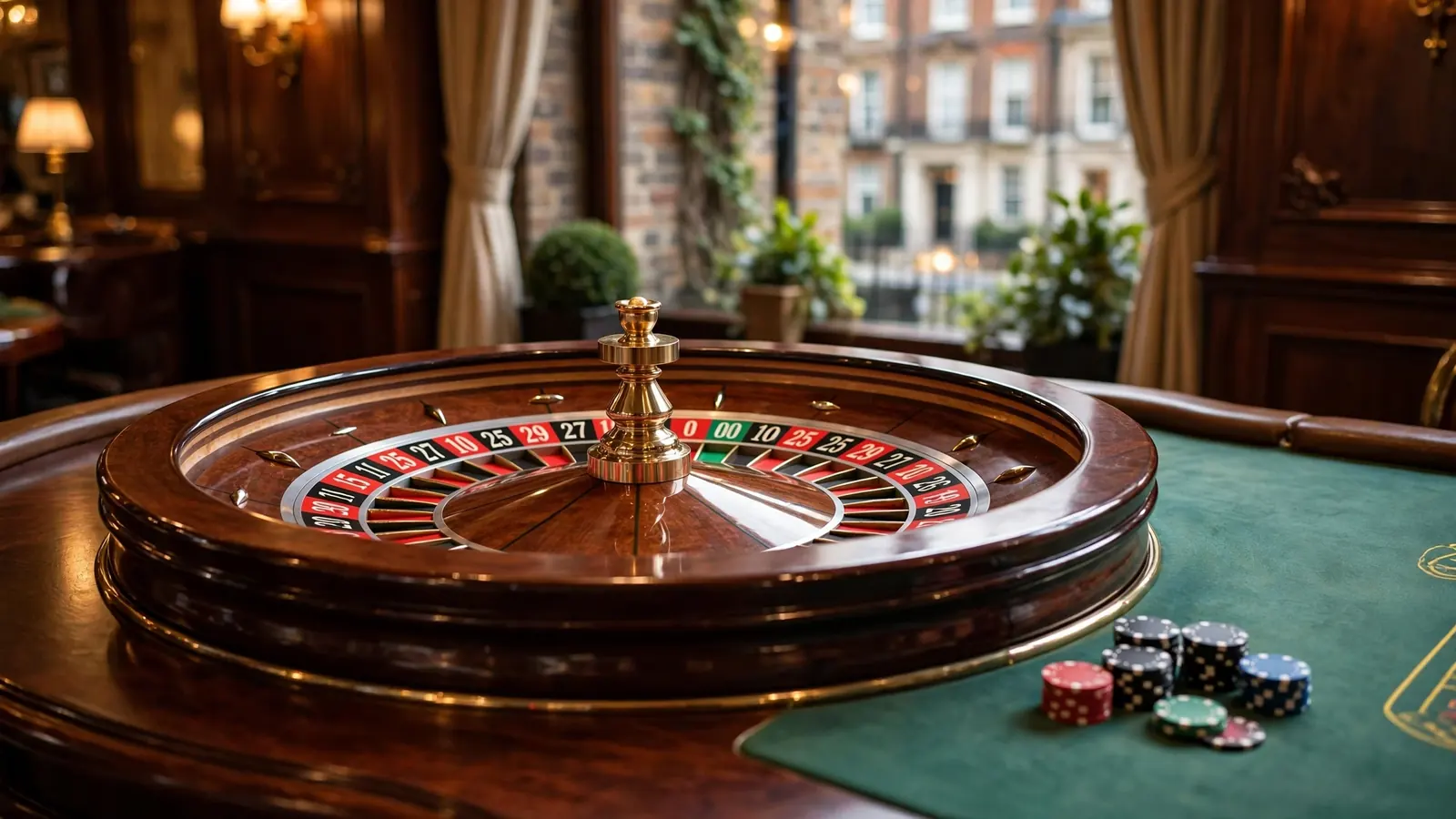
American Roulette in UK Online Casinos
American roulette is a casino game built around a numbered wheel, with one feature that separates it from the European version: the American wheel includes both 0 and 00. That extra double-zero number changes the chance of a selected number winning. The difference is small in appearance but fixed in the game’s structure, so it matters whenever American and European roulette are compared.
For a straight selection of one number, the stated odds of winning in American roulette are 1 in 38. In European roulette, they are 1 in 37. The American version therefore gives each selected number a lower chance of being the result. This is not a temporary effect of a particular session or a change in how the game is presented online; it follows from the additional 00.
The distinction is easy to overlook when both versions are labelled simply as roulette. A casino’s game catalogue may offer several roulette titles, and the visual presentation can make them look broadly alike. The version name is more useful than the artwork: “American” signals the double-zero format, while “European” refers to the single-zero comparison. Checking that label before a session establishes which odds apply.
When choosing an online casino for American roulette in the UK in 2026, it is worth checking the practical details available for each option. The verdicts below stick to the information provided.
-
Britsino
- Payout speed
- 1-3 business days
Britsino has a stated payout speed of 1–3 business days.
-
Amunbet
- Payout speed
- 1-3 business days
Amunbet has a stated payout speed of 1–3 business days.
-
Dieselwin
- Payout speed
- 1-3 business days
Dieselwin has a stated payout speed of 1–3 business days.
-
BeOnBet
- Payout speed
- 1-3 business days
BeOnBet has a stated payout speed of 1–3 business days.
-
Jetsetspins
- Payout speed
- 1-3 business days
Jetsetspins has a stated payout speed of 1–3 business days.
-
SpinFormula
- Payout speed
- 1-3 business days
SpinFormula has a stated payout speed of 1–3 business days.
-
Revery Play
- Payout speed
- 1-3 business days
Revery Play has a stated payout speed of 1–3 business days.
-
WinBeast
- Payout speed
- 1-3 business days
WinBeast has a stated payout speed of 1–3 business days.
-
Chanze
- Payout speed
- 1-3 business days
Chanze has a stated payout speed of 1–3 business days.
-
Zombillion
- Payout speed
- 1-3 business days
Zombillion has a stated payout speed of 1–3 business days.
The numbers describe the chance attached to a single selection, not a prediction of what will happen next. A result does not become more or less likely because a previous spin produced a particular number. A run of results may look patterned, but it does not remove the double-zero pocket or change the stated 1-in-38 chance in American roulette. Tracking earlier outcomes cannot alter the next spin’s underlying odds.
That distinction matters when reviewing an online American roulette game. The screen may show recent results, animation, or other presentation features, but those elements do not make the wheel’s number structure more favourable. The essential comparison remains between the American format’s 1-in-38 chance for a selected number and the European format’s 1-in-37 chance. In numerical terms, the extra 00 is the reason for the difference; interface design does not reverse it.
American roulette is available as an online casino game in the UK, but the phrase can refer to different ways of presenting play. A digital version uses a computer-generated result, whereas a live dealer game shows a physical wheel being spun and accepts bets through an on-screen interface. Those formats can differ in pace and presentation, but the defining American feature remains the double-zero number. The format should not be mistaken for a change to the version’s underlying number count.
The odds comparison is useful because it separates a game’s appearance from its mathematical structure. A polished interface, a themed table or a live studio does not make American roulette equivalent to European roulette. Where both are offered, the version name and the stated odds are the details that determine the relevant comparison. The distinction is not a matter of preference or branding alone: the extra number changes the chance of a selected number being the result.
 Online Casino Tournaments UK: Scoring and EntryCompare tournament scoring methods, including stake-relative wins, consecutive wins and qualifying-spin thresholds, alongside entry terms and prize conditions.
 Casino Dice Games in the UK: How Online Play WorksLearn how online casino dice play relates stakes to uncertain outcomes, why UK availability depends on the law, and how to assess…
It is also important not to read “1 in 38” as a promise that one win will occur in every group of 38 spins. It expresses a probability for a selected number, not a timetable. Results can cluster or remain absent across a stretch of play without changing the chance attached to a later spin. A sequence of outcomes cannot be used to calculate a due number.
For someone comparing American roulette casinos in the UK, the practical starting point is therefore the game version rather than the promotional name of a table. The American label indicates the double-zero structure and its 1-in-38 chance for a selected number. A European table has the 1-in-37 comparison. These figures provide a direct basis for understanding the difference without assuming that the game’s presentation, recent results or online setting alters it.
The American format is neither a different game merely because it is shown online nor a European table with a cosmetic change. Its defining distinction is part of the game itself. The additional 00 is present in both the wheel and the corresponding game design, and it produces the lower stated chance for a selected number compared with European roulette. That is the central point to keep in view when the same casino offers both versions.
This overview concerns the game’s format and probability, not a forecast of returns from an individual session. Roulette remains a game of chance, and the odds do not guarantee a result within any particular run of play. Any online casino play is for entertainment, not gambling advice.
Assessing Casino Terms for American Roulette
A casino’s suitability for American Roulette is not established by a prominent welcome banner. The relevant comparison is between the game’s availability, the operator’s regulatory status and the conditions attached to any offer. A bonus can look substantial while adding little usable value if live games are excluded or contribute only a small amount towards the required wagering.
Start with the licence
For a UK player, the first check is whether the operator holds a current UK Gambling Commission licence for the service it provides. Live dealer casinos are legal in the UK when the operator has that licence. A familiar brand name, a polished site or a mention of a licence from another jurisdiction does not replace the UK regulatory requirement.
The licence check establishes whether the operator is authorised to serve the market; it does not settle whether its terms are favourable. Those are separate questions. A licensed casino may still attach restrictions to a promotion, and those restrictions determine whether the offer can be used for American Roulette at all. The licence is a threshold condition, not a quality rating.
Separate the offer from the game
Welcome promotions should be read by eligible game, not by headline value. A specialist review of UK casino offers reports that many welcome deals consist of free spins for slot games and are unavailable at live tables. That distinction matters when the intended game is live American Roulette: a promotion for another category has no direct value for that session.
 Online Bingo UK: Formats, Tickets and Slot TermsExplore ticket formats, prize conditions, slot bonus terms, licence checks and withdrawals. In 90-ball bingo, prizes mark one line, two lines and…
 Chicken Road Game in UK Casinos: What Is VerifiedLearn what the Chicken Road label does—and does not—confirm, how random outcomes affect long-term cost, and why bonus terms need a cash…
The wording in the casino’s own terms remains decisive. Check whether American Roulette is included, whether the offer applies to live dealer games generally, and whether any named games are excluded. If the terms do not clearly establish eligibility, the offer should not be treated as roulette credit. A banner’s broad language is not a substitute for the conditions that govern the promotion.
A useful comparison records the offer’s practical status in plain terms: usable for the intended game, usable only for other games, or unclear. This avoids assigning value to a bonus before confirming that it can be applied to the chosen activity. It also prevents a common accounting error: counting promotional funds as though they were cash available without restrictions.
Put wagering requirements into the calculation
Where a promotion has wagering requirements, the required play is part of its cost. The amount shown in the offer cannot be assessed alone; the terms specify how qualifying play is counted and which games count towards completion. Live games may receive only a small weighting. A specialist review describes a case in which live play counted at 10% towards the wagering requirement. At that rate, most of the qualifying activity would need to come from elsewhere, so the promotion may be poorly matched to a player interested only in roulette.
The exact weighting is offer-specific. It should be found in the terms for the particular promotion, rather than inferred from another casino or another offer. If roulette contributes less than slot play, the apparent bonus value and the amount of roulette play needed to clear its conditions are not the same thing. A low contribution can make the offer expensive in time and activity even when its face value appears attractive.
Do
- Check for a current UK Gambling Commission licence.
- Verify if American Roulette is included in the offer terms.
- Confirm the wagering weighting for live games.
- Review maximum bet limits before opting in.
Don't
- Rely on prominent welcome banners alone.
- Assume a bonus applies to live tables if not stated.
- Count promotional funds as unrestricted cash.
- Assume a general site description replaces specific offer terms.
The calculation should also distinguish between games that qualify and games that contribute at a reduced rate. These are not interchangeable conditions. A game may be permitted while still making limited progress towards the requirement. If the wording is ambiguous, the practical value of the bonus is uncertain; treating it as fully usable would overstate the benefit.
Read the restrictions before opting in
Before accepting an offer, review its wagering requirement, game weighting and maximum bet limits. These conditions can change the cost of participation or restrict how the promotional balance may be used. The relevant terms are those attached to the specific offer at the time of acceptance; general descriptions elsewhere on the site may not contain the operative detail.
It is also worth checking whether the promotion requires an opt-in and whether accepting it changes access to other offers or funds. No assumption should be made about these conditions without the terms stating them. If a restriction is unclear, the conservative assessment is to exclude the bonus from the value comparison rather than count on a favourable interpretation.
A short comparison can keep the decision factual:
- Regulatory status: a UK Gambling Commission licence is in place.
- Game eligibility: the offer expressly covers American Roulette or live dealer games that include it.
- Contribution: the terms state how roulette play counts towards wagering.
- Restrictions: the applicable wagering rules and maximum bet conditions are clear.
This framework does not produce a universal “best” casino. It identifies whether a particular operator and promotion fit the intended use. For American Roulette, a smaller offer that clearly applies to the game may be more relevant than a larger slot promotion that cannot be used at a live table. The difference is not marketing language; it is whether the terms convert the advertised benefit into usable value.
Live American Roulette: Dealer, Pace and Format
Live American roulette combines a physical game in a studio with a digital betting interface. A human dealer spins the wheel, while the game is streamed in real time to the casino screen. Bets are entered on-screen rather than placed physically at the table, so the format has two distinct parts: the dealer-led action and the player’s interface.

That distinguishes it from a computerised roulette game, where a Random Number Generator determines the result rather than a dealer spinning a physical wheel. The live stream shows the real table in operation; the digital version is generated by software. Both are played online, but the source of the game action differs.
A slower table format
Live play moves at a slower pace than digital roulette. The dealer must conduct the game at the physical table, and the online interface follows that sequence. Each round therefore takes longer than an automated version, where the software can move directly between stages. The pace is part of the format, not a setting that can be assumed to match a computerised game.
This has a practical effect on how quickly a session progresses. A slower round rate means fewer opportunities to place bets within the same period, although it does not change the underlying outcome of any individual spin. A live table is therefore a different experience of the game, rather than a faster route through it.
Live games also have higher minimum bets than digital versions. That condition matters before play begins: a table whose minimum is above the amount set aside for a session is not a suitable choice, regardless of how its stream or interface appears. A budget should be fixed in advance and kept unchanged during play; the live format does not make outcomes predictable.
Connection and screen interface
A stable internet connection is required to follow live play. The stream and betting controls rely on an active connection, so interruptions can make the session difficult to follow. This is a practical distinction from a digital game that generates its results within the software, rather than presenting a continuous studio stream.
The interface is where the player selects and submits bets while watching the dealer. It does not turn the physical wheel into a computer-generated one: the streamed game remains dealer-operated. The screen provides access to the betting controls and the live action in one place, but the pace remains governed by the table.
The choice between live and computerised American roulette is consequently a choice between formats. Live play offers a streamed studio game with a human dealer and a physical wheel; computerised play uses an RNG. The trade-off is slower rounds, higher minimum bets and dependence on a stable connection. These are operating conditions, not indicators that one format gives a better chance of winning. This content is for entertainment purposes only and is not gambling advice.
 Online casinos without ID in the UK: what to knowLearn what “no ID” claims mean, when UK casinos can request documents, and why UKGC-licensed operators may verify customers later.
 JetX Casino Game in the UK: Format and LicensingLearn how JetX’s format differs from a slot or dealer-led table game, and why a demo cannot establish licensing or real-money suitability.
Placing Bets and Reading Roulette Payouts
A roulette wager has two parts: the stake and the selection covered by that stake. The result is determined when the ball comes to rest on a number. A bet wins when that number matches the selection; otherwise, the stake is lost. The payout is tied to the type of bet and the amount placed, so the displayed paytable is essential to understanding what a winning result returns.
For anyone learning how to play American roulette, the basic sequence is straightforward. A bet is placed on the game interface, the betting period ends, and the wheel produces a result. The casino then settles each wager according to whether its selection covers the winning number and the applicable payout. The interface may show the stake and potential return while bets are being made, but those figures should be read alongside the table rules. A displayed return is not a prediction of the result.
A straight-up bet selects one number. Its payout is comparatively large if that number wins, but the house edge is 2.9%. Other roulette bets have a house edge of 2.7%. That difference is relevant when comparing the cost built into bet types: a larger potential payout does not, by itself, make a wager better value. Payout size and the chance of a winning result are separate parts of the calculation.
The house edge describes the casino’s mathematical advantage over time, not a deduction taken from every individual stake. A particular spin can produce a win or a loss, and neither outcome changes the edge attached to the bet. It is therefore not a measure of what a single session will return. A winning run does not remove the underlying cost, just as a loss does not make a later wager more likely to win.
When assessing American roulette payouts, the relevant comparison is not simply which selection offers the biggest return. The return needs to be weighed against the bet’s house edge and the conditions shown in the game’s paytable. A small potential return can still carry a cost, while a more dramatic payout can correspond to a less frequent winning outcome. The precise figures depend on the bet being considered; they should not be inferred from the appearance of the interface.
Before wagering, the table rules and paytable should be reviewed, including how a win is settled and whether the displayed amount includes the original stake. A clear reading prevents a quoted return from being mistaken for profit. The stake should also fit a set entertainment budget, with no increase to recover losses or extend play beyond that limit. Roulette remains a game of chance, not a way to produce a dependable return.
How the American Roulette Table Is Laid Out
An American roulette table is organised around a numbered betting area, with spaces for wagers arranged beside and around it. The defining feature in this layout is a separate box for 00 alongside the box for 0. The double-zero is not a label or a decorative mark: it is a distinct number on the table and has its own place for a wager.
The main numbered area is commonly shown as a compact grid. Each number occupies an individual square, while boundaries between neighbouring squares provide the reference points for bets covering more than one number. This arrangement lets a player select a single space or place a chip on a line or junction to cover a group. The position of the chip matters; a small change can alter which spaces are included.

The zero spaces are set apart from the ordinary numbered grid, making them visually easy to distinguish. On an American layout, both 0 and 00 appear as separate betting positions. A table showing only a single zero does not represent the American layout, even if its other sections look familiar. On a digital table, the same distinction should be visible in the on-screen betting area before a wager is placed.
Beyond the numbered grid, the layout includes marked areas for broader selections. These let players cover categories of numbers rather than choosing one exact square. The labels and boundaries show where those wagers belong; they do not change the number of spaces covered by a chip placed on the central grid. Reading the printed or on-screen divisions is therefore part of identifying the intended selection, not merely a matter of presentation.
A useful way to read the table is to treat each marked space as an instruction about coverage. A chip placed inside an individual number’s box selects that number. A chip placed across a shared boundary refers to the spaces touching that boundary. The outer areas are marked separately, so their selections can be distinguished from those made directly on the numbered grid. The table’s divisions carry practical meaning: placement determines the wager recorded.
Online versions often reproduce the same basic arrangement on screen. The display may allow a selection by clicking or tapping a marked area, but the visual map still indicates what has been chosen. Before confirming a bet, the highlighted position can be checked against the intended square or boundary. This is particularly relevant around the separated zero boxes, where 0 and 00 are adjacent features of the layout but remain different selections.
The American roulette casino table layout is thus recognised by its numbered grid and its two distinct zero positions, including the additional 00. The arrangement makes the extra selection visible at the point where wagers are placed. It is the table’s map of betting positions; the physical wheel is a separate part of the game.
American Table Layout Features
An American roulette table is distinguished by its numbered grid and the presence of two separate green boxes for 0 and 00, which are distinct betting positions.
The American Roulette Wheel and Its Two Green Pockets
The defining feature of an American roulette wheel is not its shape or movement but the extra green pocket marked 00. Alongside it is the single-zero pocket, marked 0. European Roulette has the 0 pocket but no 00, leaving the American wheel with an additional place for the ball to land.
That difference changes the number of possible outcomes on a spin. On an American wheel, the chance of a selected number coming up is 1 in 38; on a European wheel, it is 1 in 37. The extra pocket does not make the ball favour one number over another. It adds another outcome that can prevent a selected number from winning, so the chance attached to each individual number is lower.
The two green pockets are easy to treat as decoration because they occupy little visual space beside the other wheel markings. Their effect is not decorative. Each is a separate result, and the double zero is not another way of writing zero: 0 and 00 are distinct pockets. A wheel with both therefore has a different probability structure from one with a single zero, even when the rest of the game appears familiar.
This is why the wheel itself matters when comparing versions of roulette. The American format’s additional pocket changes the denominator for a winning number from 37 to 38. That produces a small-looking numerical difference, but it applies to every spin rather than only to a particular colour or position. A player choosing the same number on either version faces different odds because the wheel offers a different set of possible landing places.

A casino may present the American wheel in a digital game or show a physical wheel in a live dealer stream. The display changes; the relevant feature does not. If the wheel includes both 0 and 00, it is the American version for this comparison. If it has only 0, it is the European version. The labels are more reliable than the visual impression of the wheel, especially when the interface is compact.
The extra green pocket is also the reason that a familiar-looking game should not be assessed by appearance alone. Red and black markings, numbered pockets and a spinning ball may make two formats seem interchangeable. The number of green pockets determines otherwise. In American Roulette, 0 and 00 give the wheel 38 possible outcomes, compared with 37 on a European wheel. For a chosen number, that means a 1-in-38 chance rather than 1 in 37.
The distinction is fixed in the wheel’s design, not something a betting pattern or a record of previous spins can alter. Each spin remains an independent result; the additional pocket is simply part of the American wheel’s structure.
Real-Money Stakes and the Cost of a Roulette Bet
A real-money stake in American Roulette carries a mathematical cost that depends on the type of bet. The house edge is 2.9% for a straight-up bet and 2.7% for other bets. These figures describe the game’s built-in disadvantage to the player, not a guaranteed deduction from each individual wager. A short session can end above or below the amount staked; that variation does not remove the underlying edge.
The difference between the two figures is narrow, but it is still relevant when comparing American Roulette betting options. A straight-up bet has the higher house edge of the two categories. Other bets have a lower edge, though neither category eliminates the casino’s advantage. The choice changes the stated cost of the wager, not the certainty of any particular result.
The house edge is not a forecast for a single session. It does not specify what a player will lose, or whether a session will finish in profit. Results fluctuate, and a favourable outcome does not establish that a bet is cheaper or more likely to succeed over time. Equally, a run of losses does not make a win due. Betting more to recover a shortfall changes the amount at risk, not the game’s underlying cost.
A budget should be set before real-money play and treated as a firm spending limit. Once it is reached, play stops; further stakes are not a method of repairing the result. The same rule applies after a win: extending a session beyond the planned limit puts more money into a game with a house edge. Staking systems that raise or alter bets after wins or losses cannot control the outcome or remove that edge.
The useful comparison is therefore straightforward: identify the bet category, note its stated house edge, and decide whether the potential cost fits the budget. Table rules and the paytable should be reviewed before play, since the displayed terms define how the particular game settles wagers. A bet that appears familiar is not a substitute for checking those terms.

American Roulette for real money remains gambling, not a reliable way to generate income. The percentages describe the game’s pricing in statistical terms; they do not promise an individual result. This content is for entertainment purposes only and is not gambling advice.
Finding American Roulette at a UK Online Casino
American Roulette may be offered as a live dealer game, but its presence at a casino does not change the regulatory condition for serving customers in Britain. An operator offering real-money gambling to the British market must hold the relevant operating licence from the UK Gambling Commission. That requirement applies regardless of where the operator is based.
A licence is therefore the first point to establish when assessing whether a live dealer casino is operating legally for UK players. The UK Gambling Commission regulates licensed operators; a site’s own description of its services is not a substitute for the regulator’s licence status. Online gambling in the UK is legal only through licensed and regulated sites, and operators must verify a customer’s age before accepting a deposit.
Availability is a separate question from legality. A UK-licensed casino may offer a range of casino games, but that does not establish that American Roulette is among them. Game catalogues can differ between operators, so the relevant listing is the one attached to the particular casino account and its live dealer section. A search result or general claim that a site offers roulette is not enough to confirm that it carries this specific variant.
The distinction matters because a familiar game name does not identify the operator behind it or establish its regulatory position. For British customers, the relevant condition is a current UK Gambling Commission operating licence held by the operator serving them. The casino’s advertised location, branding or access from a UK device does not replace that requirement.
- Confirm the operator holds a UK Gambling Commission licence.
- Verify the casino lists American Roulette in its catalogue.
- Check if the game is available in the live dealer section.
- Ensure the operator verifies age before accepting deposits.
American Roulette availability should therefore be assessed in two steps: whether the casino actually lists the game, and whether the operator holds the licence required to provide real-money gambling in the UK. These are separate checks. A listed game does not establish lawful status, and a licensed casino does not necessarily carry every roulette variant.
This information is for entertainment purposes only and is not gambling advice.
The American Roulette Game: What Determines a Win
A roulette result is determined by the number where the ball comes to rest. A player wins when that number matches the number selected for the wager. If the result and selection do not match, the wager has not won. The rule is direct: the casino game does not award a win because a number appeared earlier or because a sequence seems likely to continue.
In an online American roulette casino game, the same outcome condition applies whether the game is presented digitally or through a live dealer. The displayed result is the number that matters. The central distinction is between the number chosen before the result and the number produced when the ball lands; a win requires those two to agree.
This definition separates the outcome from its value. A matching result determines whether a wager wins, while the amount paid depends on the particular wager’s terms. Those are separate questions: first, whether the selected number matches; then, what the relevant payout rules assign to that result. A result can therefore be identified as a win without assuming that every winning selection returns the same amount.
The result is also independent of a player’s expectations. Previous outcomes do not change which number the ball lands on next, and a run of results does not turn a non-matching selection into a winning one. A tracker may record what has happened, but it cannot alter the condition for a win.

For clarity, the game can be reduced to a simple comparison: note the chosen number, note the number shown as the result, and compare them. A match is a win under the basic rule; a mismatch is not. This describes the outcome only, not the wider cost or payout of a wager. Those depend on the terms attached to the selection, rather than on a different definition of what counts as a winning result.
How Many Pockets Are on an American Roulette Wheel?
An American roulette wheel has 38 pockets: the numbered pockets from 1 to 36, plus a green 0 pocket and a green 00 pocket. The two green spaces are the detail that distinguishes its pocket count from the European wheel.
The zero and double zero are separate pockets, not two ways of labelling the same space. A ball can come to rest in either one, just as it can in any numbered pocket. So the answer to how many pockets are on an American roulette wheel is 38.

The European wheel has one green pocket, marked 0, rather than both 0 and 00. It therefore has 37 pockets: the numbered spaces from 1 to 36 and the single green zero. Comparing the wheels, the American version has one additional pocket, and that extra space is the double zero.
The colour helps make the difference visible, but it is the separate pocket that matters for counting. On an American wheel, 0 and 00 each occupy their own position. Treating them as a single “zero area” would undercount the wheel and obscure the distinction between the two formats.
This is a fixed feature of the standard American wheel, not a variation in how a particular table labels its betting area. The wheel itself contains 38 pockets, including both green spaces. The European wheel’s single green space gives it one fewer.
In short, an American roulette wheel has 38 pockets, with 0 and 00 as its two green pockets. A European roulette wheel has one green 0 pocket and 37 pockets in total. The double zero is the defining difference in the pocket count; it is not an extra label attached to the ordinary zero.
How can you win live dealer roulette?
You win when the ball lands on a number or outcome you selected. In American roulette, a straight-up number bet has a 1-in-38 chance of winning; no result is guaranteed.
Why does the dealer always win in blackjack?
The dealer does not always win. In blackjack, players try to beat the dealer without going over 21, although the game retains a house edge.
Which single rule has the biggest effect on house edge?
In French roulette, the rule that an even-money bet loses only half when the ball lands on zero reduces the impact of zero on that bet.
Casino Games in the UK: Slots, Live Play and More
Content created by the «Apcelero.com» team