
Check the route before you deposit
 Available in US
A cashier’s listed methods are account-specific, and a bank transfer may not use the same route for deposits and withdrawals.
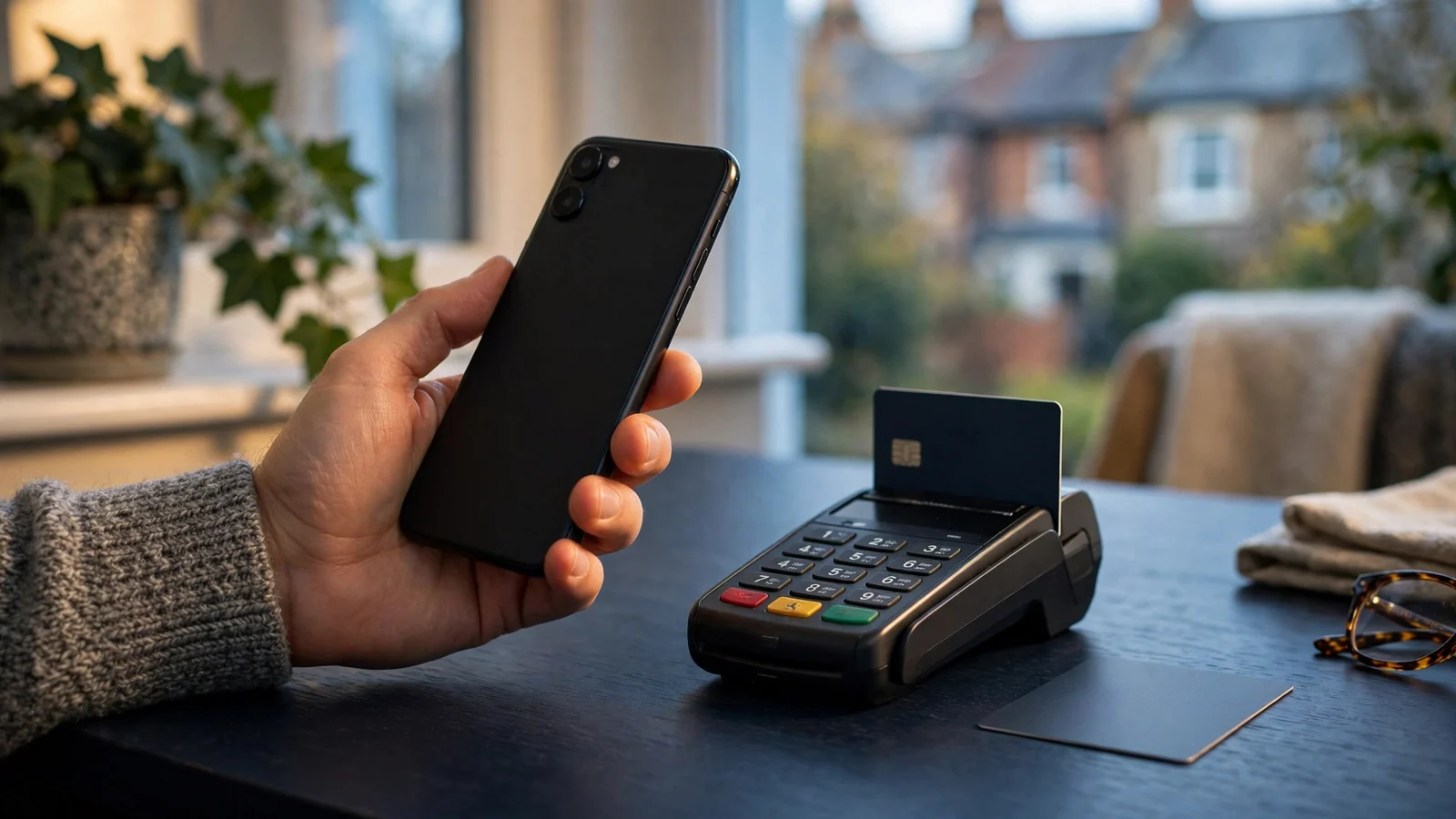
How Bank Transfers Fit Into a Casino Cashier
A casino cashier is the account’s payment menu: it shows the routes the operator makes available for moving money into or out of the gambling balance. A bank transfer is one possible route, not a feature of a particular game and not a term that guarantees the same arrangement across casino sites. Its value can only be assessed alongside the other methods displayed for the account.
The practical comparison starts with the payment source and destination. A bank transfer moves funds through a bank account; a card payment uses a payment card, while an e-wallet uses a separate digital account. PaysafeCard is a prepaid payment option. These categories describe different ways of funding an account, not interchangeable labels for one service. A cashier may present several of them, but a method mentioned in a review is not proof that it is available to every customer or remains available when the cashier is checked.
Independent specialist reviews list Visa, Mastercard, Skrill, Neteller, PaysafeCard and several major cryptocurrencies among methods accepted by casinos. That is useful as a comparison of the kinds of options that may be discussed, not as a live payment menu for any particular operator. The cashier is the relevant record for the account in question. It shows which routes can actually be selected and the conditions attached to them at that time.
When choosing a UK casino for instant bank transfers, check the stated withdrawal processing time as well as the payment method. This list gives you a concise reference for the payout speed provided for each operator.
-
Britsino
- Payout speed
- 1-3 business days
Britsino lists a payout speed of 1–3 business days. Keep that timeframe in mind when considering how quickly withdrawals are processed.
-
Amunbet
- Payout speed
- 1-3 business days
Amunbet lists a payout speed of 1–3 business days. This gives you a stated timeframe to consider for withdrawals.
-
Dieselwin
- Payout speed
- 1-3 business days
Dieselwin lists a payout speed of 1–3 business days. Use this as a reference when reviewing its withdrawal timing.
-
BeOnBet
- Payout speed
- 1-3 business days
BeOnBet lists a payout speed of 1–3 business days. Its stated withdrawal timeframe is worth noting when comparing payment options.
-
Jetsetspins
- Payout speed
- 1-3 business days
Jetsetspins lists a payout speed of 1–3 business days. This provides a clear stated timeframe for withdrawals.
-
SpinFormula
- Payout speed
- 1-3 business days
SpinFormula lists a payout speed of 1–3 business days. Consider this stated timeframe when assessing its payout speed.
-
Revery Play
- Payout speed
- 1-3 business days
Revery Play lists a payout speed of 1–3 business days. This is the available information about its withdrawal timing.
-
WinBeast
- Payout speed
- 1-3 business days
WinBeast lists a payout speed of 1–3 business days. The stated timeframe can help set expectations for withdrawals.
-
Chanze
- Payout speed
- 1-3 business days
Chanze lists a payout speed of 1–3 business days. Keep this stated withdrawal timeframe in mind.
-
Zombillion
- Payout speed
- 1-3 business days
Zombillion lists a payout speed of 1–3 business days. This is the stated timeframe available for its withdrawals.
Bank transfer is therefore best considered as one line in a broader payment comparison. The method name alone does not establish whether a transfer is suitable. The account may display different choices, and each choice may carry its own terms. Minimum and maximum transaction values, fees and processing times for deposits and withdrawals depend on both the selected method and the live cashier. A review that describes one arrangement cannot settle the terms shown on another account, or even guarantee that the same terms remain current.
This matters because payment comparisons can otherwise become a tally of labels. Seeing a bank transfer alongside a card or wallet does not establish that each method serves the same purpose, has the same conditions, or can be used for every transaction. The cashier’s wording and terms need to be read as a set: method, transaction type and applicable conditions. If a comparison leaves one of those unclear, it is incomplete rather than favourable.
For a UK customer, the distinction between card types also has a legal boundary. Remote gambling licensees must not accept credit-card payments for gambling, including where the payment is routed through a money service business. Visa and Mastercard are brand names, not confirmation that a displayed card transaction is a credit-card payment. The permitted payment arrangement must be clear from the cashier; a credit card cannot be treated as an acceptable route simply because a card brand appears in a review.
 iPad Casinos in the UK: Accounts and PaymentsSee how iPad access affects casino accounts, deposits and withdrawals, and why operators serving Great Britain need a UK Gambling Commission licence.
 Casinos That Accept Giropay in the UKLearn how to check Giropay in a casino cashier and whether a deposit qualifies for an offer; payment methods and bonus terms…
A bank transfer comparison should also avoid assuming that a payment option has one universal definition across operators. The phrase may be used to describe a bank-based route, but the cashier’s actual description determines what is being offered. The decisive information is not the label in isolation; it is the transaction option and its stated terms. That is the point at which a general payment-method comparison becomes useful for an account-level decision.
The same discipline applies to review tables. A table can help identify methods worth checking, but it is a snapshot assembled by its publisher. Specialist reviews may list payment brands or categories without proving that a route is currently selectable for a particular customer. Treating a review as the cashier would turn a comparison aid into a payment instruction, which is a poor exchange.
The cashier also keeps the comparison grounded in the transaction being considered. Deposit and withdrawal conditions can differ, so a method’s appearance in one context should not be read as confirmation about another. For an initial overview, the useful question is simply how bank transfer sits beside the other options that the account displays. The exact conditions belong to the live terms for the chosen route, not to a generic description of bank transfers.
In short, an online casino bank transfer is not inherently preferable or unsuitable on its name alone. It is one payment route to compare against the alternatives shown by the cashier, with the current method-specific terms doing the actual work. A review can provide context; the live cashier provides the operative comparison.
What Makes a Bank Transfer Casino a Better Fit
A bank transfer option is suitable only when its account terms fit the intended use. The label alone says little about the amount that can be deposited, any charge attached to the transaction or the financial controls available on the account. Those conditions determine the practical cost and scope of using a bank transfer at a casino; a favourable description cannot replace them.
The current cashier is the place to check the figures before depositing. A specialist review may help identify points to inspect, but its information can become outdated as an operator changes its terms. The cashier should be checked for the minimum deposit, maximum transaction value and any fee that applies to the selected method. If one of these details is absent or unclear, the cost or permitted transaction size is not established. Treating an unknown charge as zero is a tidy calculation, but not a reliable one.
Compare the permitted amounts with the intended deposit
A minimum deposit sets the entry point for a transaction. A maximum transaction value sets its upper boundary. Both matter: a method may be unsuitable if the minimum exceeds the amount intended for a deposit, or if the maximum is below the amount that would otherwise be deposited in one transaction. The relevant figures are those displayed for the account and selected method, not a number remembered from an earlier visit or copied from an old review.

The maximum is also distinct from the amount a player chooses to deposit. A cashier limit defines what the system permits; it does not establish what is affordable or appropriate. A financial limit on the account serves a different purpose: it allows spending to be bounded independently of the payment method’s transaction rules. The two controls should not be treated as substitutes. One governs the payment transaction; the other governs account-level financial activity.
Include fees in the cost
A fee changes the amount ultimately required to complete a deposit. Its presence, basis and amount should be read from the current cashier or the operator’s applicable terms. The fact that a bank transfer is selected does not, by itself, establish that the operator or another party will charge nothing. Nor does a fee shown for one route prove that the same charge applies to every bank transfer option.
For a straightforward comparison, the relevant calculation is the amount intended for the account plus any stated charge, subject to the method’s minimum and maximum. If the cashier does not explain whether a fee applies, the total cost remains uncertain. That uncertainty is a term of the offer, not a reason to assume the most favourable interpretation.
A casino account may also present financial-limit controls alongside payment information. Their location and operation are account-specific, so the cashier and account settings need to be read together. A payment option can meet the transaction requirements and still be a poor fit if the account’s controls do not support the intended approach to spending.
Do
- Check the live cashier for minimum and maximum transaction values
- Include any stated fees in the total cost calculation
- Review account-level financial controls before depositing
Don't
- Rely on outdated figures from specialist reviews
- Assume an unknown charge is zero
- Treat transaction limits as substitutes for financial controls
Check the account’s financial controls
New remote customers must be given a prompt to consider setting a financial limit before making their first deposit. Limit facilities must also remain available at account level after that point. This makes the control a continuing part of the account rather than a one-time notice to dismiss during registration.
The limit should be considered before money is transferred, not reconstructed afterwards from the deposit history. A deposit limit and a payment-method maximum answer different questions: the former concerns the account’s permitted funding, while the latter constrains a transaction through a particular route. Where both apply, the effective amount is subject to both sets of terms. A method’s high transaction ceiling does not cancel an account limit, and an account limit does not remove the need to check the cashier’s conditions.
A bank transfer casino is therefore a better fit when the displayed minimum, maximum and fees are acceptable and the account’s financial controls are clear and usable. That assessment can be made without relying on a speed claim or a ranking. The decision rests on the actual terms attached to the account at the time of deposit, with any unresolved figure left unresolved rather than filled in by assumption.
The Terms Behind an Instant Bank Transfer
“Instant” is a description, not a settlement guarantee. A casino may use the word for a bank transfer option, but that label alone does not establish when a deposit will appear in the account or when a withdrawal will reach a bank. The transaction terms shown for the selected method in the live cashier are the relevant measure.

The distinction matters because a payment can involve separate stages. A casino may receive a request, process it, and then pass it to a bank or payment service for handling. A fast step at one point does not prove that the entire transaction will be completed at the same pace. Unless the cashier gives a specific processing statement for the relevant direction, “instant” should not be read as a promised arrival time.
The phrase can also describe the way a payment is initiated rather than its full outcome. A bank transfer option might connect to a banking service or ask for bank details, but the wording does not identify the exact route or show what happens after confirmation. The practical terms belong to the option presented in that account’s cashier, not to the adjective attached to it.
For an instant bank transfer casino in the UK, the useful comparison is between the label and the transaction information displayed at the point of payment. A precise statement should make clear whether it relates to deposits or withdrawals, and whether it describes casino processing or the time for funds to reach the bank. If that distinction is absent, the claim does not support a reliable timing calculation.
Processing language should be read with the same care as a quoted amount. “Processed instantly” may refer only to the casino’s handling of a request. It does not necessarily mean the bank has credited the funds. Conversely, a stated arrival period may include more than the operator’s own processing. The wording needs to identify what event starts and ends the stated interval; otherwise, it is a description without a defined clock.
Public banking information does not supply stable UK-specific figures for casino withdrawal limits, fees or processing times. Those terms depend on the casino’s payment arrangements and the selected method, so the live cashier is the controlling reference for a particular account. A general statement about bank transfers cannot replace the conditions attached to the actual transaction.
A specialist review may provide useful context about how a casino presents its payment options, but withdrawal terms can change. Methods, limits, fees and processing statements are not permanent features simply because they appeared in a review. The date and scope of the claim matter: a reference to deposits does not establish withdrawal timing, and information about one route does not necessarily describe another.
A sound reading of the cashier separates four items: the transaction direction, the method, any stated fee or limit, and the processing wording. Each item answers a different question. A method may be offered for one direction but not the other; a limit determines the permitted amount, while a fee changes the net value. Processing language concerns handling, and still may not define when the receiving bank makes funds available. Combining these into one assumption produces an unreliable expectation.
The same discipline applies to phrases such as “same day” or “near-instant” if they appear beside a bank transfer option. They need to be read as the operator’s statement about a specified stage, not as an unconditional result. A casino’s terms may set out conditions that affect handling, and the displayed information can be revised. An older description cannot settle what applies to a new transaction.

The phrase “instant bank transfer casino” therefore has limited financial meaning on its own. It identifies a payment description, not a verified completion time or a fixed set of charges. The cashier supplies the current terms for the selected option; the transaction should be assessed against those terms, with deposits and withdrawals treated as separate processes. When the wording does not define the stage or timing, no exact arrival time follows from the word “instant.”
Checking Whether a Casino Offers Bank Transfer
A payment method shown on a casino’s general information page is not proof that it is available to every account. The live cashier is the practical check: it displays the options attached to the account and the transaction being set up. A casino with bank transfer listed in an older review may no longer show that route, or may not offer it to a particular account.
Availability should be checked after signing in, using the cashier’s deposit section. The method needs to appear as a selectable option there, rather than only in a payment guide, promotional page or review. If the cashier requests details or presents a confirmation screen, those steps also indicate whether the route can be used for that transaction. A search result or a general list of casinos with bank transfer cannot confirm the current account-level position.
The same check applies to withdrawals, but in the withdrawal area of the cashier. A bank transfer offered for deposits does not, by itself, establish that the casino supports a bank transfer casino withdrawal. Deposit and payout options can differ, so the method list for one transaction should not be treated as evidence for the other. A specialist review advises checking whether the selected deposit method is also available for withdrawals; the account’s live cashier is the relevant place to confirm what is offered now.
- Sign in to the account and open the cashier
- Confirm bank transfer is a selectable option for deposits
- Verify bank transfer is available in the withdrawal section
- Check for any outstanding identity verification requirements
This distinction matters before money is sent. A specialist review also advises checking the payout route attached to the account, any outstanding identity checks and the operator’s current terms before depositing. Those checks establish whether the account is in a position to use the available services; a payment logo alone does not settle the question. If the cashier does not show bank transfer for the intended transaction, the method is not confirmed for that account, whatever a general page says.
For a casino with instant bank transfer wording, the availability check remains the same: the live cashier must show the route. The word “instant” in a description does not establish that the option is currently enabled for an account, nor does it replace the transaction details displayed during the payment process. Availability and processing terms are separate matters.
A useful record is the cashier screen or the operator’s current payment terms, checked at the point of use. These are more relevant than an older review because cashier options can change. The check should match the account, transaction type and selected method; a result for another account or for deposits cannot confirm a bank transfer casino payout.
The game itself does not determine whether bank transfer is available. Whether the balance is intended for slots or another casino game, the payment option belongs to the account cashier. Searches for slots with bank transfer or slots with instant bank transfer therefore lead back to the same verification: confirm the funding route in the live cashier, then check the separate withdrawal options before depositing.

When a Casino Accepts Bank Transfer but the Withdrawal Route Differs
A bank transfer shown as a deposit option does not, by itself, establish that the same route can be used to receive casino funds. Deposit and withdrawal methods are separate account conditions. A casino that accepts bank transfer for funding may offer another route for withdrawals, or may set a rule linking a payout to the original deposit method.
The distinction matters before any money is sent. A specialist casino review notes that some non-UK casinos require withdrawals to use the method used for the deposit. That condition should not be treated as a rule for every casino, but it is a reason to check the account terms rather than infer a payout route from the deposit screen. Where the original method is required, a bank transfer deposit could determine how funds must later be returned.
The wording in a cashier can also be narrower than it first appears. A bank transfer option may be listed for adding funds while a separate withdrawal page specifies other available routes. The relevant detail is whether bank transfer is offered for both directions on the particular account, not whether the payment method appears somewhere on the site. Account information and operator terms need to describe the withdrawal route clearly enough to establish that distinction.
This is especially important when considering non-UK casinos. Some may impose a same-method withdrawal condition, but that does not make an offshore site a UK-regulated option. Remote gambling operators serving the British market must hold a UK Gambling Commission licence, regardless of where they are based. A non-UK casino without that licence sits outside the UK regulatory system; its payment terms should not be confused with the protections and requirements applying to a licensed operator.
A practical comparison therefore records two separate answers: whether bank transfer can fund the account, and whether it can return funds from that account. If the second answer is unclear, the deposit option alone is not enough to establish route compatibility. A different withdrawal route may also require account details or payment information that match the account holder; mismatched information can make a route unsuitable even when it is listed.
The point is not to assume that every casino will pay back through the same channel, or that every transfer deposit creates a restriction. It is to treat the deposit route and withdrawal route as distinct terms until the current account information confirms otherwise. The payment label is not the payout rule; the casino’s stated conditions are.
Bank Transfer Availability Across Casino Sites and Slots
A bank transfer is an account-level payment route, not a feature attached to a particular slot. The casino cashier handles deposits to the player account; games draw on the balance held there. A slot therefore cannot make a bank transfer available, change its terms or determine whether the cashier accepts it. The relevant distinction is between a site that offers the method to an account and a game that uses funds already in that account.
This matters when comparing bank transfer casino sites. A payment option shown in a general description or an older review does not establish that it is available to every customer at that site. The cashier displayed for the account is the practical reference point. Its options may depend on the operator’s current setup and the account being used, so a method listed elsewhere should not be treated as confirmed support.

The same applies to searches for bank transfer slots or instant bank transfer slots. There is no separate bank-transfer setting within an individual game. If the cashier supports a transfer for the account, the deposited balance can then be used for eligible games on that site. If the cashier does not show the route, choosing a different slot will not add it. “Instant” in a game label or site description also does not establish what the cashier offers or the terms attached to a transaction.
A specialist review advises checking the live cashier before depositing, including the minimum deposit, maximum transaction value, fees and account financial-limit controls. These are account and payment conditions, not properties of a slot. The cashier is also where a site’s current payment choices can be assessed for the account in use; a general claim about a casino does not settle that question.
For comparisons of fast bank transfer casino sites in the UK, separating the site from the game prevents a basic category error. A casino may host many slots, but the payment route is managed outside them. The slot catalogue cannot establish whether a bank transfer is offered, and a game’s presence on a site says nothing about the cashier’s available methods. The useful check is therefore site-level support for the account, followed by the cashier’s stated terms. That keeps payment availability separate from game selection without treating a game title as evidence of a payment facility.
Fast Transfers: What the Cashier Can Actually Confirm
A fast-transfer claim is useful only when it identifies what is being timed. A payment note may describe the casino’s handling of a request, while the completed movement of funds depends on the selected method and the banking process. Without a clear definition, “fast” is a label, not a processing commitment.
A specialist review of casino payment terms notes that public banking information does not provide stable UK-specific figures for processing times, withdrawal limits or fees. The live cashier is therefore the relevant reference for the method available on an account. A general statement about bank transfers cannot establish how quickly a particular casino will handle a particular transaction.
The wording should be checked for scope. A stated processing period may concern the operator’s review rather than the point at which funds appear in a bank account. If the cashier does not distinguish those stages, the final arrival time cannot be calculated from that statement alone. No useful comparison can be made by treating an undefined speed claim as a guaranteed completion time.
The cashier should also be checked again before relying on a figure found in an older review or promotional description. A specialist review notes that withdrawal methods, limits, fees and processing statements can change over time. A previously published estimate may therefore no longer match the terms shown for the selected method.

For a meaningful comparison, the current information needs to identify the transfer route and explain which part of the process its timing covers. If those details are absent, the claim does not support a firm expectation about when funds will arrive. The practical distinction is between a stated handling time and a confirmed end-to-end time; only the former may be described, and only where the cashier makes its scope clear.
A fast bank-transfer casino is not established by the adjective alone. The usable evidence is the current cashier wording for the chosen method, including any stated processing conditions. Where that wording is silent or ambiguous, no precise arrival time can be inferred.
Paying for Slots by Bank Transfer
A bank transfer is an account-funding method, not a payment choice made inside a slot. The casino cashier handles the transaction: it records the selected method and the amount sent to the gambling account. Once funds appear in the account balance, that balance is used for play. Opening a game does not create a separate bank-transfer transaction.
This distinction matters when interpreting a casino described as suitable for slots by bank transfer. The phrase concerns how the account can be funded, not whether a particular game has its own bank connection or payment screen. A slot’s interface and the cashier perform different jobs: one provides the game, while the other manages deposits to the account.
The cashier is also where the practical terms must be checked. A specialist review of casino payment terms notes that deposit minimums, maximums, fees and processing times depend on the selected method and the live cashier. Those details determine the amount that can be sent and what may be deducted or delayed before it is available for play. A general label such as “bank transfer” does not settle those conditions.
Funding Slot Play
-
1
Select Method
Choose bank transfer in the casino cashier and enter the deposit amount.
-
2
Complete Transaction
Follow the bank instruction and wait for the funds to be processed by the operator.
-
3
Verify Balance
Check that the funds are reflected in the account balance before opening a slot game.
The balance shown in the account is therefore the relevant figure when starting a slot session, rather than the amount entered into a bank instruction before the transaction has been reflected by the casino. The distinction avoids treating a pending transfer as spendable funds.
There is no separate “pay by bank transfer” setting within a slot. The method is selected at account level, and the game uses the funds already held in that account. Any description of a casino as accepting bank transfers should be understood in that limited sense: the cashier may offer a route for funding the account, while the game itself does not process the bank payment.
Bank Transfer Casino Payouts: Routes and Conditions
A bank transfer used to fund a casino account does not, by itself, establish how a withdrawal will be paid. The available payout route is an account-level condition, not an automatic extension of the deposit method. A specialist review identifies debit card, bank transfer, PayPal and e-wallets such as Skrill or Neteller among routes that may be offered by UK-licensed casinos; the live cashier and account terms determine which option applies in a particular case.
That check belongs before a deposit, not after a withdrawal request has been submitted. The account’s payout route, any outstanding identity checks and the operator’s current terms can all affect whether a request can proceed. A payment method displayed for deposits is not sufficient evidence that it is available for withdrawals.
The amount eligible for withdrawal also matters. A specialist review notes that a casino may refuse a request when the account balance is below its minimum withdrawal threshold. That threshold is specific to the operator’s current terms, so the balance alone does not show whether a payout can be requested. If the displayed minimum exceeds the available balance, the request may not be accepted.

A payout assessment therefore has three separate parts: the route available to the account, completion of any required identity checks, and compliance with the operator’s current withdrawal conditions. These details can change, so a previously used route or an older description of the cashier should not be treated as confirmation. For a bank transfer casino payout, the operative terms are those shown for the account when the withdrawal is requested.
Depositing by Bank Transfer: Limits, Fees and Checks
Before a bank transfer is submitted, the account’s current cashier should be checked for the minimum deposit, maximum transaction value and any fee attached to the selected route. These terms are not interchangeable: a transfer can meet the cashier’s minimum while still exceeding its permitted maximum, or cost more than the amount displayed as the deposit itself.
A specialist casino review recommends checking those figures alongside the account’s financial-limit controls. The cashier and account settings are the practical reference points, since the available terms can depend on the selected method and may change. A limit set on the account also affects what can be deposited, regardless of the bank balance.

Age verification is a prerequisite, not a later housekeeping step. Operators must verify a customer’s age before allowing funds to be deposited into a gambling account. New remote customers must also be prompted to consider a financial limit before making their first deposit, with account-level limit facilities remaining accessible afterwards. Those controls should be understood before a transfer is authorised, rather than treated as details to sort out after money has moved.
Credit cards are not an alternative funding route for gambling at remote UK-licensed operators. UK Gambling Commission rules prohibit accepting credit-card payments for gambling, including when a payment is routed through a money service business. A bank transfer should therefore be funded from an eligible bank account, not used as a way to disguise a credit-card payment.
The useful pre-deposit check is a short reconciliation: account age status confirmed, financial limit understood, and the cashier’s minimum, maximum and fee reviewed for the chosen transfer. If any term is unclear or differs between the cashier and account settings, the deposit should wait until the operator’s current terms resolve the discrepancy.
Which UK casinos still accept Payforit in 2026?
Payforit is listed as available at Kwiff, NetBet, JackpotJoy and Virgin Games. Check the cashier for your account to confirm it is still offered.
What are the withdrawal limits when using a Payforit casino?
Payforit cannot be used to withdraw casino funds. Withdrawal limits depend on the method available to your account, so check the live cashier and current operator terms.
How does Payforit work at a casino deposit?
Select Payforit, enter your mobile number, then submit the confirmation code sent by SMS. The deposit is charged to your monthly phone bill or deducted from your Pay as you Go balance.
What is the maximum amount I can deposit via Payforit?
Payforit deposits are capped at £30 per transaction. The cashier shows the limit that applies to your account.
Payments at UK Casinos: Deposits and Withdrawals
Content created by the «Apcelero.com» team