
Separate the category label from the game details
 Available in US
The phrase groups a style of online casino play, but it does not establish a title’s rules, features or outcomes.
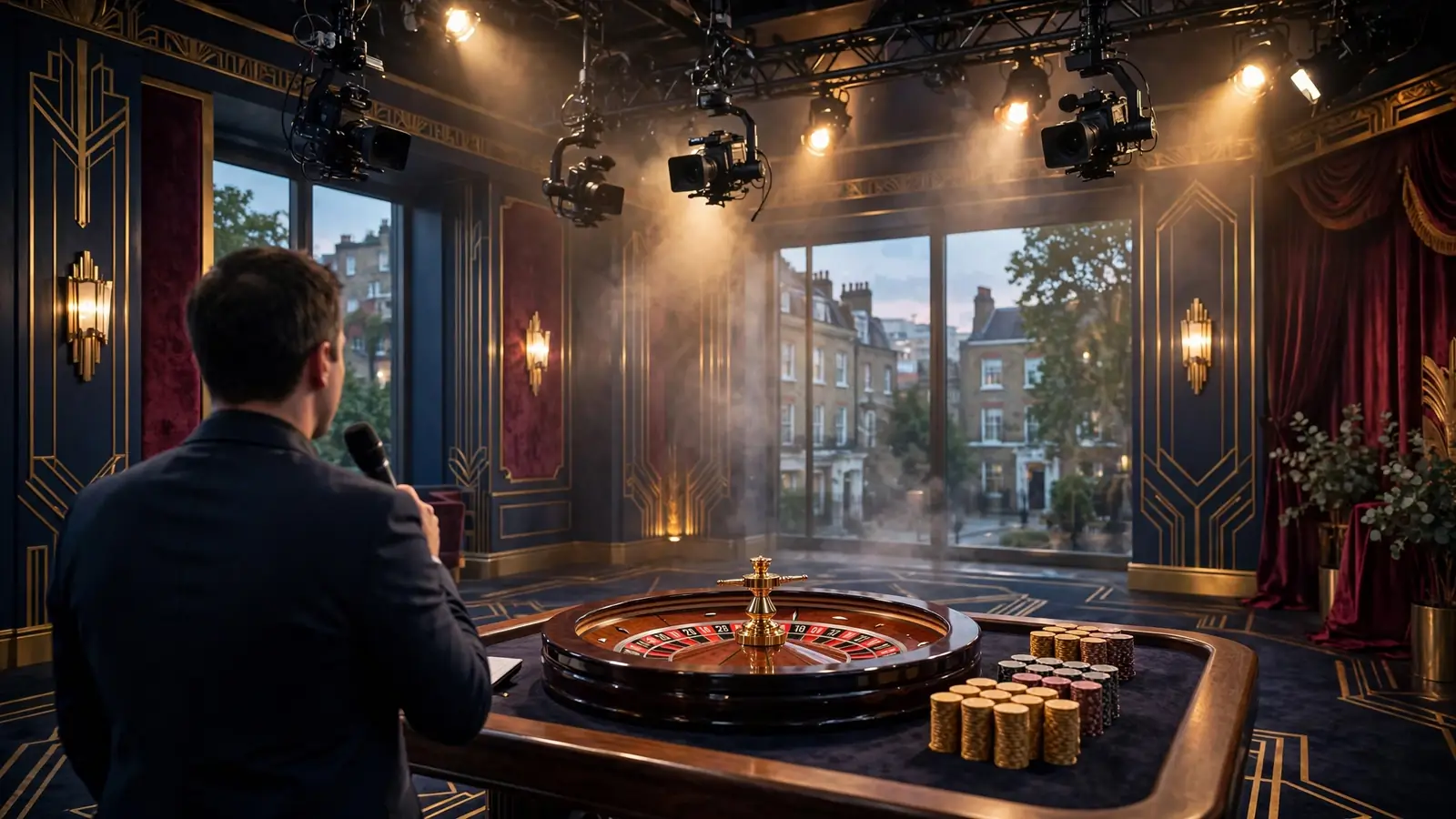
How Live Game Shows Fit into Online Casino Play
“Live game shows” sits at the meeting point of two familiar ideas: casino play and entertainment described as a show. In an online casino setting, the phrase is a category label rather than a complete description of a particular product. It can help organise a subject, but it does not establish what a game contains, how it works or what a player would experience.
That distinction matters because a short label can carry more meaning in everyday conversation than it can support on its own. “Live” may suggest a particular way of presenting play, while “game show” may call to mind a recognisable entertainment format. Neither implication is enough to identify rules, features, participants or outcomes. Those details belong to the description of an individual title, not to the broad category name.
For the same reason, references to live game shows at online casinos should not be treated as a catalogue. A heading or menu label can group material for browsing, but it does not confirm that every casino uses the same definition or includes the same products. The phrase is useful for locating a topic; it is not a specification.
A category, not a product description
The wording can be read as a way of separating one area of casino-related entertainment from the general idea of casino play. That separation is linguistic, not proof of a fixed boundary. Without a product description, the label does not settle whether a particular offering belongs in the category or what distinguishes it from other online casino content.
This is especially relevant when the phrase appears in promotional copy or a site menu. A label may be broad enough to collect several kinds of content, or it may be used narrowly by a particular operator. The wording alone does not show which approach is being taken. A sound description would connect the category label to an identifiable product and explain the product in its own terms.
 Slots at UK Online Casinos: Studios and GamesExplore UK casino pages covering studios such as Amatic and Blueprint Gaming, plus named slots including Divine Fortune and Mega Moolah.
 Mega Moolah Casinos UK: Rules and AvailabilityLearn how UK slot rules apply to Mega Moolah, what is verified about availability and bonuses, and why casino shortlists need checking.…
Nor does the word “live” independently verify that a particular experience is happening in real time, that a human presenter is involved, or that a particular technical arrangement is used. Those might be expectations readers bring to the phrase, but expectations are not product facts. The distinction is not pedantic: a category name can raise an impression, while only the specific product information can confirm it.
Why the wording appears in casino browsing
Online casino language often combines a setting with a type of entertainment. “Live game show” makes that combination concise, which is why it can function as a heading, filter or broad description. It signals the area of interest without needing to name a title. For readers, that is a useful starting point, provided the label is not mistaken for evidence about an individual offering.
The same restraint applies to references to game shows in the plural. A plural category may indicate a group or subject area, but it does not show how many products are available, whether they share features, or whether one operator’s selection matches another’s. The count and contents would need to be established separately. A plural noun is grammar, not an inventory.

“Online casino” supplies a setting, but it does not fill in the missing detail. It identifies the broad environment in which the topic is being discussed. It does not tell whether a specific title is currently available, how it is accessed, or what conditions apply to participation. Those are separate questions and should be answered from the relevant product and operator information.
Reading the label with precision
A careful reading keeps three levels apart. First is the broad subject: live game shows in the context of online casino play. Second is the way a particular casino classifies or presents that subject. Third is the detail of a named product. Moving from the first level to the third without evidence creates assumptions, not knowledge.
This separation also makes comparisons more reliable. Two sites may use similar wording while referring to different selections or describing them at different levels of detail. Conversely, different labels might point towards a related subject. The wording by itself cannot establish equivalence. A comparison needs identifiable products and a consistent basis for describing them, rather than a match between category names.
Do
- Treat "live game shows" as a broad subject area
- Use specific product descriptions to confirm features
- Connect category labels to identifiable products
Don't
- Mistake a category label for a product specification
- Assume "live" independently verifies real-time human interaction
- Treat a heading or menu label as a product catalogue
The practical point is modest but important: broad terminology helps define what is being discussed, while leaving the substance to be established at product level. “Live game shows” can therefore be treated as a subject within online casino play, not as a promise that a particular format, mechanic or title is present. That keeps the category useful without asking it to prove more than its words can support.
Casino Game Shows as a Live Format
“Casino game shows” is a compact label for entertainment presented in a gambling context. It brings two ideas together: a game-show style of presentation and a casino setting. The phrase does not, by itself, identify a particular title, explain how a game works or establish what a casino offers. Those details need to be assessed separately rather than inferred from the category name.
The word “live” adds a further distinction. It points to a format presented in real time, but it does not settle what participants do, how outcomes are determined or what role the casino has in the experience. The phrase can therefore describe a broad area of interest without supplying a reliable product specification. Treating the label as if it were a set of rules would turn a category into a promise.
That distinction matters because terminology often does more work than evidence. A game may be described with game-show language in a casino context, while the phrase alone cannot confirm whether it is available for real-money play, whether it is streamed, or whether any particular feature is present. A catalogue entry, game information page and applicable terms are needed to establish those points. If none is available, the accurate description remains limited to the broad category.
 Megaways Slots at UK Casinos: What Is VerifiedSee what supplier and licensing details establish, why operator lobbies matter, and how bonus terms and RTP vary. Amatic holds a UK…
 Amatic Slots at UK Casinos: What to CheckLearn how Amatic slots reach UK players, what licensing and bonus terms mean, and why Amatic is a supplier rather than a…
Casino game shows are also not interchangeable with every use of “live game show”. The latter wording is wider: it can refer to live entertainment or other formats beyond casino play. Adding “casino” narrows the subject to a gambling context, but still leaves room for different interpretations. It does not prove that every result bearing the label belongs to the same type of product, or that two products with similar names share rules or presentation.
For UK readers, “casino game shows” may be understood as a category within online casino entertainment. That is a way to describe the subject, not a claim that a particular UK casino has a title available. Availability can depend on the casino’s current offering, and a category heading cannot confirm an individual listing. The distinction is practical: general wording helps classify a subject; a current operator catalogue establishes whether a product is actually offered.
The phrase “live casino game show” is more specific in wording because it joins the casino setting, live presentation and game-show label. Even so, it remains a description rather than a complete account of a game. “Live casino game shows online” adds the online setting, but it still does not name a provider, a title, a format’s rules or a particular casino. None of those details follows automatically from the wording.
This is why a useful description should separate what a label indicates from what a product page confirms. The label can establish the broad subject under discussion. A product page should establish the title and the operator offering it; the game information should explain its actual operation; and the relevant terms should clarify the conditions attached to play. If those sources do not align, the category phrase is not enough to resolve the difference.
The same care applies when casino game shows are discussed as entertainment. The wording suggests a presentation associated with games and show-style framing, but it cannot substantiate claims about pace, interaction, audience participation, prizes or any other feature. Such claims require product-specific support. Without it, repeating familiar assumptions may make a description sound detailed while leaving its central points unproved.
A restrained use of the term is therefore more informative than an embellished one. “Casino game shows” names a broad subject in the casino setting. “Live” signals a real-time format, and “online” identifies the digital context. These are useful boundaries, but not substitutes for a verified title or its details. Keeping category, format and product separate prevents a general label from being mistaken for evidence about a specific game.
What “Live Casino Game Shows” Signals in Search
Adding “live” to a casino game-show description narrows the subject. It suggests an interest in a format presented as live, rather than a general category of online casino entertainment. The wording also places the subject within casino play. Those two ideas are useful for defining the topic, but they do not establish how a particular product works.
“Live” can describe the way a product is presented, but the label alone does not confirm who or what appears on screen, whether play involves interaction, or how outcomes are determined. Nor does the phrase identify rules, stakes, prizes or software. Those details belong to an individual product’s published information, not to the category name.
 Online Casinos with Amatic Slots in the UKLearn how Amatic titles reach UK casino operators through direct integrations or aggregator feeds, and why the operator—not the supplier—runs the casino…
 Play’n GO Slots at UK Casinos: Games and TermsLearn how to check individual game features, casino availability, free-play terms, RTP differences, mobile access and UK payment conditions.
The same distinction applies when the wording includes “online casino”. That phrase locates the subject in a digital casino setting; it does not prove that a particular casino carries a particular game. A title may be available in one operator’s lobby and absent from another. A broad category label is not a catalogue, and an operator’s general description is not evidence of availability at every casino.
The UK wording adds a market context, not a product specification. It can indicate that the subject is being considered in relation to British online casino play, but it does not show that every product described this way is available to people in the UK. Availability depends on the relevant operator and its current offering. A UK-facing phrase should therefore not be read as a guarantee about a title, its features or its presence on a specific platform.
This matters because several different questions can sit behind similar language. One person may be trying to understand what the category covers; another may want to find a particular product; a third may be checking whether a casino offers it. The phrase itself answers none of those product-level questions. It supplies a subject boundary, not a transaction detail.
For comparison, a general reference to casino game shows does not necessarily make the live element explicit. Adding that element signals that live presentation is central to the intended subject. It still does not resolve whether “live” refers to a host, a broadcast, a particular style of participation or something else. Treating any of those interpretations as confirmed would turn a broad label into a claim about mechanics.
A useful description should therefore separate category language from verifiable product information. Category wording can explain what kind of subject is being discussed. A product page or operator listing can establish whether a named title is offered and state its features. The two serve different purposes; neither substitutes for the other.
The practical limit is straightforward: the phrase identifies an area of interest within online casino entertainment, with live presentation as part of its intended scope. It does not, by itself, support a ranking, a recommendation or a claim about gameplay. Those require details tied to specific products and operators. Until those details are established, the accurate description remains at category level rather than implying a particular experience.
Assessing “Best” Claims Without a Verified Game List
Choosing an online casino for game shows involves checking practical details as well as the games on offer. This list gives a concise reference point for considering payout speed.
-
Britsino
- Payout speed
- 1-3 business days
Britsino lists a payout speed of 1–3 business days.
-
Amunbet
- Payout speed
- 1-3 business days
Amunbet lists a payout speed of 1–3 business days.
-
Dieselwin
- Payout speed
- 1-3 business days
Dieselwin lists a payout speed of 1–3 business days.
-
BeOnBet
- Payout speed
- 1-3 business days
BeOnBet lists a payout speed of 1–3 business days.
-
Jetsetspins
- Payout speed
- 1-3 business days
Jetsetspins lists a payout speed of 1–3 business days.
-
SpinFormula
- Payout speed
- 1-3 business days
SpinFormula lists a payout speed of 1–3 business days.
-
Revery Play
- Payout speed
- 1-3 business days
Revery Play lists a payout speed of 1–3 business days.
-
WinBeast
- Payout speed
- 1-3 business days
WinBeast lists a payout speed of 1–3 business days.
-
Chanze
- Payout speed
- 1-3 business days
Chanze lists a payout speed of 1–3 business days.
-
Zombillion
- Payout speed
- 1-3 business days
Zombillion lists a payout speed of 1–3 business days.
A “best” label is a conclusion, not a feature of a game. It has value only when the products being judged are identified, the criteria are stated and the evidence supports the result. Without those elements, a ranking of online casino game shows is a selection of names dressed as an assessment.
The first test is whether the comparison concerns actual, identifiable titles. A category label alone cannot establish which products belong in a ranking, and a casino’s general description cannot confirm that a particular title is currently available. A name should be traceable to a product, rather than inferred from broad wording about live entertainment or casino play.
The second test is the basis of the ranking. “Best” might refer to presentation, accessibility, available information or some other defined quality. Those are not interchangeable measures. A list that ranks products by one criterion should not imply that it has measured another. If the standard is not disclosed, the order may reflect editorial preference, commercial placement or an unexplained decision; the reader cannot tell which.
Evidence also needs to match the claim. A description can support a statement about how a product is presented, but it does not, by itself, prove that the product is superior. A claim about availability needs current confirmation from the relevant casino, since a catalogue listing can change. A claim about a particular feature needs product-specific information, not assumptions drawn from the wider category.
 Push Gaming slots at UK online casinos: what to knowLearn how to verify a casino’s Push Gaming catalogue, distinguish providers from operators, and check UKGC licensing, bonuses and play conditions.
 Thunderkick slots at UK casinos: evidence and checksLearn how Amatic’s five-reel, three-row format differs from the limited Thunderkick evidence, plus what to check on licensing, RTP and bonus terms.
Currency matters especially when a page promises the best options for a particular year. A dated label does not make the underlying assessment current. The page needs a clear basis for when availability and product details were checked, and it should distinguish those time-sensitive details from criteria that are less likely to change. Otherwise, a title may remain on the list after the evidence supporting its inclusion has gone stale.
A defensible ranking should make its limits visible. It should explain what was assessed, what information was available and what the ordering means. Where evidence does not support a distinction between two products, forcing one above the other adds precision without adding knowledge. The same applies to broad claims such as “best live casino game shows in the UK”: geographic wording does not supply proof of quality or establish a meaningful comparison.
There is a practical difference between an editorial shortlist and a measured ranking. A shortlist can indicate that selected products meet stated conditions. A ranking goes further by claiming that one performs better than another under a shared standard. That stronger claim requires comparable evidence across the entries. If details are available for one product but not another, placing both in a single ordered table may conceal rather than resolve the gap.
For a reader assessing a list, the useful questions are straightforward: Are the titles clearly identified? Are the selection criteria explained? Does the supporting information relate to each listed product, and is its date clear? Does the order follow from the stated criteria? If those answers cannot be established, “best” functions as a headline, not a finding.
The phrase best online casino game shows UK 2026 therefore cannot be treated as a result in itself. A year, a location and a superlative do not replace product-level evidence. Until the entries and the basis for judging them can be substantiated, a ranked verdict would claim more than the available information can carry.
UK Licensing for Casinos Offering Live Game Shows
A live presentation does not change the central licensing question: the business providing remote gambling to consumers in Great Britain must hold the relevant UKGC licence. The Gambling Commission regulates commercial gambling in Great Britain, including online casino activity, and its jurisdiction does not depend on where the equipment supporting the service is located.
This matters when assessing an online casino that presents game shows as part of its offering. A studio, platform or other technical component may be based elsewhere, but equipment location alone does not remove the operator’s licensing responsibility. The relevant issue is whether the business offers remote gambling to consumers in Great Britain and holds the required authority to do so.
The Commission issues operating licences to businesses and personal licences to individuals working in regulated roles. These are distinct responsibilities: the operating licence concerns the business, while a personal licence applies to an individual. A company’s use of a live format does not, by itself, establish that it is authorised to provide gambling in Great Britain. Nor does the presence of a game or a live presentation amount to proof of an operator’s regulatory status.

For a UK-facing casino, the licence belongs to the gambling operator, not to the general idea of a game-show format. The licensing framework regulates the commercial activity offered to customers. It is therefore not enough for a site to describe itself as a casino or to display live entertainment; its operating status must be considered separately from its marketing and presentation.
The distinction between the service provider and its technical arrangements is also material. A platform may rely on equipment or services located outside Great Britain, but remote gambling offered to people in Great Britain remains within the Commission’s remit. A foreign location is not a substitute for the relevant UKGC licence.
The phrase “online casinos with live game shows UK” can cover sites with very different arrangements, but the regulatory test remains tied to the operator and the activity it provides. A live element does not create an exemption from the rules applying to remote gambling. Equally, a licence held by a technology supplier would not, on its own, establish that a consumer-facing casino is licensed to take part in the regulated market.
In practical terms, licensing and product availability are separate matters. A licence indicates regulatory authority for the relevant business activity; it does not prove that a particular live game show is available at a particular casino. That distinction keeps a description of an online casino with live game shows from being mistaken for confirmation of either its licence or its catalogue.
Great Britain’s system places the operating obligation on the business serving the market. The Commission’s role is regulatory, while the operator’s licence is the relevant authorisation for the casino service. These points apply regardless of whether the casino’s presentation is live, recorded or otherwise branded: the format does not replace the licensing requirement.
Crazy Time and Funky Time Searches: What Can Be Verified
The names Crazy Time and Funky Time can be treated as labels appearing in casino-related searches, but a label alone does not establish what a product is. It does not confirm that either name refers to a live casino game show, identify a provider, or show that a UK-facing casino currently offers it. Those details need confirmation from an identifiable product or operator source.
The distinction matters because a search phrase can combine a title with terms such as “live” and “game show” without proving that the title belongs to that category. Repetition across listings would not, by itself, establish the rules, format, presentation or availability of a product. Nor does a casino-themed name demonstrate that a product is offered for real-money play.
A reliable identification would connect the name to a specific product record and its provider. An operator’s own catalogue could establish whether the title appears in that casino’s current offering; a provider’s product information could establish what the product is and how it is described. A title match without those links leaves the central question unresolved. Similar wording, copied descriptions or a promotional mention are not substitutes for product identification.
Availability is also separate from identity. A title might be described in a general listing, yet that does not establish that it is accessible through a particular UK casino. Casino catalogues can differ, and a listing does not prove that a game is active, available to every account or offered for real-money play. The operator’s current catalogue is the relevant place to confirm its own offering.

The names should therefore not be used as evidence of particular features. Without product-specific confirmation, there is no basis for describing rounds, rules, bonuses, presenters, stakes or outcomes for either one. Adding such details would turn a recognisable name into an unsupported product description. That is a poor basis for deciding what a casino offers.
For UK play, the operator relationship also matters. Remote gambling offered to consumers in Great Britain falls within the UK Gambling Commission’s licensing system; the regulator issues operating licences to businesses, while software suppliers may hold separate permissions to provide products. A name appearing in a casino context does not establish which company supplies it or which operator offers it. Those are separate facts and should not be inferred from branding.
Accordingly, Crazy Time and Funky Time are best handled as unconfirmed product names unless a current, attributable catalogue entry identifies each one. The wording of a listing may support a description once tied to the product, but the name by itself supports no account of gameplay or current UK availability.
Live Game Shows in UK Online Casinos
The phrase “live game shows in UK online casinos” combines three ideas: a game-show label, live presentation and an online casino setting in the United Kingdom. Each part narrows the subject, but none identifies a particular title or establishes what a game contains. The wording is therefore useful for defining a category, not for confirming a catalogue.
“Live” signals that the presentation is framed as happening in real time. It does not, by itself, establish the rules, the role of a presenter, the way outcomes are determined or whether a particular product is currently available. Those details need to be checked against the individual game’s information. A title’s promotional description is not a substitute for its rules or operating terms.
Difference between labels and products
Category language is broad and sets the territory, whereas product information is specific. A label cannot settle how a product works or confirm its current availability in a casino's catalogue.
The casino context also matters. A game appearing in an online casino does not automatically make it a live game show; the label needs to match the product itself. Conversely, a game-show-style presentation does not establish that the product is a casino game or that it involves real-money play. Those distinctions are practical, not merely semantic: a category label cannot settle how a product works.
The UK wording adds a location and market context, rather than proof that any particular casino carries a particular title. A general page about live game shows may describe a broad subject, while an operator’s lobby or game information is needed to establish whether a specific offering is present. Availability can differ between casino catalogues, so a general category description should not be treated as an inventory.
Likewise, calling something one of the “best” live game shows does not supply a basis for comparison. A defensible choice would require identifiable titles and consistent information about them. Without that, a ranking would amount to a claim without a measurable comparison behind it. The phrase “best live game shows casino UK” may express an interest in a UK-focused selection, but it does not name the products that such a selection would need to assess.
A useful description keeps these limits visible. It can identify the subject as live game-show content associated with online casinos in the UK, while leaving product-specific claims to evidence about the product. It should not imply that all casinos offer the same catalogue, that all items carrying similar labels share mechanics, or that a category page confirms current availability.

The distinction is important because category language is broad and product information is specific. A heading can set the territory; it cannot do the accounting. Until a title, its rules and its current availability are established, the most accurate account remains a description of the category rather than a list of supposedly leading games.
Comparing Live Casino Game Shows: Evidence Required
A defensible comparison of live casino game shows needs more than a shared label. Each entry would have to be identified by its exact title and provider, with confirmation that the product is available to the UK market and is a live format. Without those basics, apparent differences may be differences in naming or availability rather than in the games themselves.
The comparison also needs consistent criteria. Relevant evidence could include documented rules, the role of the presenter, how a round proceeds, the decisions available to a player and the way outcomes are determined. These details should come from current product information, not from assumptions based on the word “show”. A live presentation does not, by itself, establish a particular mechanic or level of interaction.
Commercial terms require separate checks. A useful assessment would distinguish the game’s own features from the casino’s conditions, such as whether access requires a deposit, how any promotion applies, and what restrictions attach to winnings. Those terms belong to the operator and can change independently of the game. Combining them into one score would obscure which party controls each condition.
- Identify the exact title and provider
- Confirm availability for the UK market
- Review documented rules and payout conditions
- Check the operator's current licensing status
- Verify the date of the last availability check
Availability should also be checked at the operator level. A title appearing in one casino’s catalogue does not establish that it is offered elsewhere, or that its terms match across operators. Any comparison should record the operator and the date on which availability and conditions were checked. Otherwise, a table can look precise while describing a product that is no longer accessible under the stated terms.
The same discipline applies to claims about quality. A ranking needs a disclosed method, evidence for each criterion and comparable information for every title included. Popularity, presentation style or a label alone cannot substitute for that method. Where titles, rules or current terms have not been independently established, a recommendation would be a conclusion without a calculation behind it.
That leaves a narrower but more reliable result: compare only products that can be identified and assessed on the same basis. If the evidence is incomplete or inconsistent, the comparison should say so rather than fill the gaps with a winner. A neat ranking is easy to publish; making its entries genuinely comparable is the expensive part.

The Live Game-Show Casino Search
A reference to a live game-show casino combines two ideas: a casino setting and entertainment presented as a live game show. The wording points to a category, not necessarily to one named game, one casino or a standard format shared across providers.
That distinction matters because the phrase can describe different things in ordinary use. It may refer to game-show-style content available through a casino, or to the broader idea of live entertainment associated with casino play. Without a specific title or product description, the label alone does not establish who presents it, how it works, whether it involves a wager or which operator offers it.
The word “casino” also does not identify the business behind the content. A software supplier may create games for licensed operators without accepting deposits or paying winnings itself. The operator is responsible for the customer-facing gambling account and its terms. These roles should not be collapsed simply because a casino-related label appears beside a game-show description.

For British players, real-money remote gambling must be offered by an operator holding the relevant UKGC licence. That regulatory point concerns the operator and the service, not whether a product’s name sounds like a live show. A descriptive phrase is not a licence record, a catalogue entry or evidence of availability.
The useful reading is therefore narrow: the phrase signals interest in live, game-show-associated casino content, while leaving the particular product and its terms unresolved. Any stronger interpretation requires an identifiable title and operator information. A label can group a subject; it cannot do the work of a product specification.
Casino Game Shows Online: Scope and Limits
The phrase “casino game shows online” covers a broad subject: casino-related entertainment accessed through an online service. It does not, by itself, establish that the format is live, identify a particular game, or show how play works. Those distinctions matter because “online” describes where access takes place, while “live” makes a more specific claim about the format.

A game-show label is not enough to determine whether a product involves real-money gambling. The Gambling Act 2005 defines a casino by the opportunity it provides to participate in casino games; a show-like presentation alone does not settle that classification. Product terms and the operator’s role are more relevant than the wording used in a heading or description.
For remote gambling offered to customers in Great Britain, the operator must hold the relevant UKGC licence. The licence belongs to the business providing the gambling service, not automatically to every game or supplier associated with it. That distinction prevents a catalogue label from being treated as evidence of a casino’s regulatory status.
The broader online category should therefore remain separate from live-specific descriptions. A listing can use “game show” as a format label, but that wording cannot establish whether a host, broadcast, or real-time interaction is involved. Nor can it verify the rules, payout conditions, or availability of any named title.
A useful description needs to say what is actually being offered and who provides it. Without those details, the phrase identifies a general area of online casino content, not a defined product or a basis for comparing games.
Are Amatic games licensed and legal to play in the UK?
Yes. Amatic Industries holds a UK Gambling Commission remote software licence, and its games are distributed to UK players through UKGC-licensed casino operators.
What bonuses and free spins are available at Amatic casinos in the UK?
32Red, Betfred and Bet365 offer free-spin wins with no wagering requirement, so winnings are credited as cash. Bet365’s offer requires a £10 minimum lifetime deposit and provides up to 500 spins over 10 days.
Must a casino be Gambling Commission-licensed to offer Amatic slots to UK players?
Yes. A casino offering remote gambling to consumers in Great Britain must hold a UK Gambling Commission licence; Amatic’s software licence does not replace the operator’s licence.
Can Amatic slots be played on a mobile phone in the UK?
Yes. Amatic games generally run in a mobile browser as HTML5 games, without requiring a download.
What is the maximum I can stake on Amatic slots in the UK?
The maximum stake per game cycle is £5 for players aged 25 and over, and £2 for players aged 18 to 24.
Slots at UK Online Casinos: Studios and Games
Content created by the «Apcelero.com» team