
Check the licence before weighing the offer
 Available in US
A foreign casino is defined by its UK Gambling Commission licence status, not by its name, branding or apparent location.
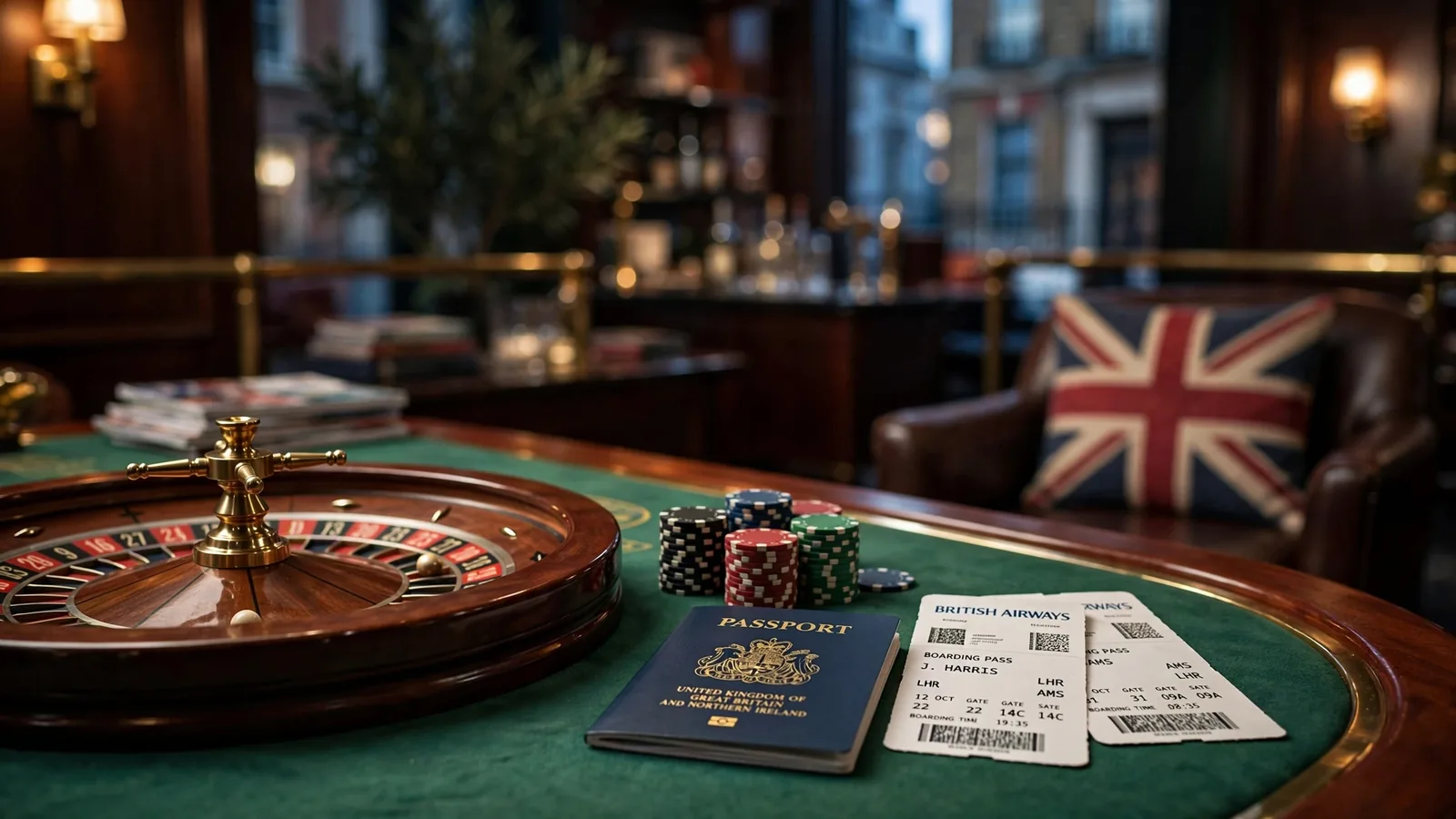
What “foreign casino” means in the UK market
In the British market, “foreign casino” describes an operator by its licensing position, not by the country suggested by its name, website design or branding. The relevant distinction is whether an online gambling operator accepts customers from Britain while holding a licence from the UK Gambling Commission. If it accepts British customers but does not hold that licence, it falls within the meaning of a foreign casino used here.
That definition is narrower than the everyday use of “foreign”. A business may have an overseas address, an international-sounding name or a website that presents itself as global; none of those details alone establishes its status. Conversely, a site can be aimed at British customers without becoming a UK-licensed casino. The classification turns on the licence held by the operator, not the impression created by its presentation.
The phrase “online casinos outside the UK” can therefore be imprecise. It may suggest that the operator’s physical location is the deciding factor. For the UK market, the key point is instead whether the operator holds a UK Gambling Commission licence while accepting British customers. The location implied by a site’s branding does not replace that test.
Choosing a foreign casino as a UK player calls for checking the practical details that matter to you before signing up. This list offers a concise reference point for considering the options.
-
Britsino
- Payout speed
- 1-3 business days
Britsino has a stated payout speed of 1–3 business days.
-
Amunbet
- Payout speed
- 1-3 business days
Amunbet has a stated payout speed of 1–3 business days.
-
Dieselwin
- Payout speed
- 1-3 business days
Dieselwin has a stated payout speed of 1–3 business days.
-
BeOnBet
- Payout speed
- 1-3 business days
BeOnBet has a stated payout speed of 1–3 business days.
-
Jetsetspins
- Payout speed
- 1-3 business days
Jetsetspins has a stated payout speed of 1–3 business days.
-
SpinFormula
- Payout speed
- 1-3 business days
SpinFormula has a stated payout speed of 1–3 business days.
-
Revery Play
- Payout speed
- 1-3 business days
Revery Play has a stated payout speed of 1–3 business days.
-
WinBeast
- Payout speed
- 1-3 business days
WinBeast has a stated payout speed of 1–3 business days.
-
Chanze
- Payout speed
- 1-3 business days
Chanze has a stated payout speed of 1–3 business days.
-
Zombillion
- Payout speed
- 1-3 business days
Zombillion has a stated payout speed of 1–3 business days.
A foreign online casino may hold a licence from an authority outside the UK. That is an offshore licence: it is not a licence from the UK Gambling Commission, and it does not place the operator under UKGC regulation. The two descriptions should not be treated as interchangeable. Saying that a casino is licensed offshore identifies a licensing arrangement outside the UK; it does not mean that the casino is regulated by the British regulator.
This distinction matters when comparing foreign online casinos for UK players. A licence badge, a statement about regulation or a reference to an overseas jurisdiction may sound reassuring, but the terms do not answer the same question. “Licensed” needs to be read with the identity of the licensing authority in view. A licence from outside the UK remains separate from UKGC authorisation.
The same applies to casino brands that appear designed for a British audience. English-language pages, pound-denominated displays or British-themed promotions would not, by themselves, change the licensing category. Those features describe how a site presents itself. They do not establish that the operator holds a UK Gambling Commission licence. Branding is the wrapping; the licence is the classification.
Nor does the phrase “foreign online slots” identify a separate legal or technical category of game. It may simply refer to slots offered through a foreign casino. The relevant distinction remains the operator’s licensing status, rather than the type of game displayed on the site or the country associated with its brand.
The expression “non-UK online casino” is also best understood in this licensing sense. It does not mean only that a company is based abroad. That operator may have an offshore licence, but it remains outside UKGC regulation. A non-UK address and a non-UK licence are related ideas, not proof of UK regulatory status.

This definition avoids two common category errors. The first is to assume that any casino with overseas branding must be a foreign casino in the relevant sense. The second is to assume that an offshore licence is equivalent to a UKGC licence because both are described as licences. Neither conclusion follows from the wording alone. The authority behind the licence is the material distinction.
“Best foreign online casinos UK” can sound like a single category of sites with a common regulatory standing. It is not. The phrase covers operators that share the specific feature defined above: they accept British customers without a UK Gambling Commission licence. Their branding, location and offshore licensing arrangements may differ, but none of those differences makes an offshore licence UKGC regulation.
For that reason, “foreign casino” should not be read as a synonym for a UK-licensed casino with international branding. It marks a different regulatory position. An operator in this category may be licensed offshore; it is not regulated by the UK Gambling Commission. The label describes that boundary and should not be mistaken for a quality rating, a guarantee or an endorsement.
When a site accepts British customers, and who is responsible
A foreign casino may allow someone in Britain to open an account or place a bet. That practical fact does not settle whether the operator is permitted to offer gambling to customers in the UK. The law draws a distinction between the individual placing a bet and the business providing the gambling service.
For a British player, using a casino licensed outside the UK is not itself a criminal offence. UK law does not prohibit an individual from betting with an overseas operator, and the player does not incur a criminal penalty simply because the casino lacks a UK Gambling Commission licence. The operator’s position is different: offering gambling facilities to customers in England, Scotland or Wales without the required UKGC licence is unlawful.
That distinction matters when a site accepts British customers. Access from the UK is not proof that the site is authorised to serve the UK market. Nor does an overseas licence, on its own, amount to permission to operate here. The player’s act of betting and the operator’s act of supplying the service are separate legal questions, with separate answers.
Acceptance is not authorisation
A site can accept a registration or a wager while still lacking the licence required for its UK-facing activity. The word “accepts” describes what happens on the site; it does not establish the operator’s legal status. For foreign online casinos accepting UK players, the relevant issue is not merely whether a British customer can get through the front door, but whether the operator holds the UKGC licence required to provide gambling facilities in Great Britain.

The legal obligation sits with the operator. A business that offers gambling to customers in England, Scotland or Wales must hold the relevant UK Gambling Commission licence. If it does not, the fact that it is licensed elsewhere does not remove that requirement. A foreign casino’s willingness to take British customers therefore cannot be treated as a legal approval of its UK-facing service.
This is why the phrase “foreign casinos accepting UK players” can describe two different things at once: a site’s practical availability to a British customer, and an operator’s provision of gambling to that customer. The first may be observable from the customer’s side. The second is the conduct that brings the licensing obligation into focus. Conflating them makes a site’s open registration page sound like a regulatory decision. It is not.
Responsibility does not transfer to the customer
The legal distinction does not make the player responsible for holding the operator’s licence. A British customer is not required to obtain a gambling licence before placing a bet, and the absence of a UKGC licence at the casino does not turn the customer’s wager into a criminal offence. The operator, by contrast, is the party providing the gambling facilities and is responsible for meeting the licensing requirement.
Do
- Recognise that the operator carries the licensing duty
- Treat a site's accessibility as a practical fact rather than legal approval
Don't
- Assume the customer is responsible for the operator's licence
- Assume that a site's open registration page represents a regulatory decision
This separation is straightforward, but it is often obscured by the language of access. A site may advertise itself as available in Britain, display a foreign licence, or allow a customer to proceed with an account. None of those actions changes who carries the licensing duty. The operator cannot pass that duty to a customer by making the service accessible, and a customer’s ability to use the service does not establish that the operator is entitled to offer it.
The same principle applies when a search is framed around the best foreign casinos accepting UK players. “Best” does not resolve the legal question, and acceptance alone cannot answer it. Ranking or describing a site as available to British customers is not the same as establishing that it has permission to provide gambling facilities in the market. The legal status of the operator remains distinct from the customer’s personal exposure.
Two questions, not one
The position can be stated without merging the two responsibilities:
- A British player is not committing a criminal offence solely by placing a bet with a casino licensed outside the UK.
- An operator offering gambling facilities to customers in England, Scotland or Wales must hold a UKGC licence; providing those facilities without one is unlawful.
The first point concerns the individual’s act of betting. The second concerns the business’s act of supplying the service. Neither cancels the other. In particular, the absence of a criminal penalty for the player does not make an unlicensed operator’s UK-facing activity lawful. Equally, the operator’s breach does not create a criminal offence for the customer merely because a bet was placed.
This is the useful boundary when assessing foreign casino sites accepting British customers: a site’s readiness to serve a customer answers a practical question, not the licensing question. The customer’s lack of criminal liability answers another question, but it does not confer permission on the business. In the UK market, the operator’s obligation remains its own.
Withdrawals: speed, delays and the final wait
A withdrawal has at least two clocks: the casino’s time to approve and release it, and the payment provider’s time to deliver it. A quoted transfer speed may describe only one of those stages. For foreign casino sites serving British customers, the distinction matters because pending periods, verification procedures and withdrawal limits vary considerably between operators. A fast payment rail cannot shorten a delay that occurs before the casino releases the funds.
E-wallets: a short stated window, not a guaranteed arrival
Skrill and Neteller are commonly presented as the quicker fiat options. Published comparisons report that most foreign casinos clear these transactions within 24 hours, with many processing them in under 12 hours. “Processing” is not necessarily the same as money appearing in the e-wallet: the operator may first review and approve the request, and the payment provider has its own part to complete.

The useful figure is therefore a stated processing window, not a promise of a completed withdrawal by a particular time. Casino terms should be checked for whether the clock begins when the request is submitted or after any pending period. The same check should establish whether weekends or operator reviews affect the stated window; no single timeline applies across all overseas casino sites.
An e-wallet may be the more predictable choice where the casino supports it and the account is already available for receiving funds. That does not remove account checks or operator-specific conditions. If a withdrawal remains pending, the relevant question is whether it is still awaiting casino approval or has already been sent to the payment service. Those are different stages, and the displayed status can determine which party is holding up the transfer.
Bank transfers: allow for the casino’s stage as well
A specialist review of foreign casino payment terms describes bank transfers as the slowest option, often taking five to seven business days. Some operators add their own processing delay before the bank-transfer timeline begins. The total wait can therefore exceed the banking estimate: approval time and delivery time should not be treated as one figure.
E-wallets
Often cleared within 24 hours, with many processed in under 12 hours.
Bank Transfers
Typically the slowest option, often taking five to seven business days.
Cryptocurrency
Can clear in under an hour, though exposes the user to market volatility.
Business days also matter. A calendar estimate can make a transfer appear late when the stated period counts working days instead. Before relying on a bank-transfer estimate, the operator’s terms need to be read for the start point, any pending period, and whether the published duration refers to its internal processing or the bank’s delivery. Without those details, a headline estimate is incomplete.
Bank transfer may still be the practical route where e-wallets are unavailable or unsuitable. Its cost is time rather than a speed advantage. A withdrawal request that waits for operator approval and then enters the banking process has two separate opportunities for delay, neither of which is captured by describing the method simply as “a bank transfer”.
Cryptocurrency: the fastest clock carries a different risk
A specialist review reports that cryptocurrency withdrawals at foreign casinos can clear in under an hour, faster than fiat methods. That is a reported processing speed, not a guarantee that every request will be approved or reach its destination within that period. The operator’s own pending period and verification requirements still matter.
There is also a financial trade-off that does not arise in the same way with a fixed sterling bank balance. Cryptocurrency values can move while funds are being processed or held. The amount received in sterling may consequently differ from the value expected when the withdrawal was requested. A shorter wait does not remove that exposure; it changes the timing, not the volatility.
For a comparison of withdrawal methods, speed alone is therefore an incomplete measure. E-wallets have reported processing windows measured in hours, bank transfers may take several business days and may face an additional operator delay, while crypto can be quicker but exposes value to market movement. The best fit depends on whether timing, predictability or avoiding currency-value fluctuation is the priority.

Verification and the operator’s own terms
Verification can affect the point at which a withdrawal is approved. UKGC-licensed operators must verify a player’s identity before processing withdrawals; foreign casinos are outside UKGC regulation, so that UKGC requirement should not be assumed to describe their procedures. Offshore casinos are not regulated by the UK Gambling Commission and do not provide UKGC-mandated affordability checks. Their withdrawal terms and checks are set outside that UKGC framework.
The practical comparison is operator-specific. Withdrawal limits, pending periods and verification procedures vary considerably, so a payment method’s advertised speed cannot establish how long a particular request will take. The terms should be read as a sequence: what must be completed before approval, how long the casino may hold a request, and how long the payment method may take once funds are released. Only then does the final wait become a meaningful estimate rather than a headline number.
UK law does not turn an offshore casino into a UK-licensed one
A foreign casino may hold a gambling licence overseas, but that licence does not authorise it to serve customers in Great Britain. The relevant distinction is the operator’s permission to offer gambling here, not whether it has paperwork issued elsewhere. For online gambling sites serving customers in England, Scotland and Wales, a licence from the UK Gambling Commission is required. Without one, offering those services is unlawful.
An offshore licence therefore does not become a UK licence by virtue of a site accepting British customers, displaying a licence number or describing itself as regulated. The operator remains outside the UK Gambling Commission’s regulatory system. A foreign casino in the UK market is not a UKGC-licensed casino, even where its offshore licensing status is genuine.
That rule concerns the operator. It does not make an individual player’s act of placing a bet with a foreign casino a criminal offence. The Gambling Act does not prohibit a UK resident from playing with an overseas operator, and there is no criminal penalty for the player on that basis. The two positions can exist at once: the site may be acting unlawfully by offering services in Great Britain without the required licence, while the customer is not committing an offence simply by betting there.
This distinction matters because the phrase “legal casino” can blur two separate questions. One is whether a person is criminally liable for gambling at a particular site. The other is whether the operator has permission to provide gambling facilities to customers in Great Britain. An answer to the first does not settle the second. Nor does the absence of a player penalty give an offshore operator UKGC status or bring it within UKGC oversight.
The practical regulatory difference is substantial. UKGC-licensed operators must follow the Commission’s requirements for the British market. Offshore operators are not regulated by the Commission, and the UKGC cannot be treated as their regulator simply because British customers can access their services. In particular, offshore casinos do not provide the affordability checks mandated by UKGC rules. That is not a minor difference in presentation: it means the safeguards attached to UKGC regulation should not be assumed to apply.

A foreign casino may make claims about its own licence or internal procedures, but those claims do not change the governing boundary. An overseas regulator is not the UK Gambling Commission, and an offshore licence does not establish compliance with British regulatory requirements. The distinction is about jurisdiction and authorisation, rather than a judgement that every offshore operator behaves identically.
For a UK resident comparing a foreign casino with a UK-licensed site, the legal position is therefore asymmetric. The individual is not criminally penalised merely for placing a bet with an overseas operator; the operator, however, must hold a UKGC licence to lawfully offer online gambling in England, Scotland and Wales. The customer’s freedom from criminal liability should not be mistaken for UK approval of the site.
That is the point at which labels stop doing useful work. “Licensed” describes a status only when the issuing authority and the scope of its permission are clear. An offshore licence may be relevant to the operator’s position in another jurisdiction, but it does not convert a foreign casino into a UK-licensed one, provide UKGC oversight, or supply the affordability safeguards that accompany that oversight.
Bonuses: calculate the wagering before counting the offer
A large headline bonus is not the amount available to withdraw. The relevant figure is the qualifying stake required by the wagering condition. A specialist review of offshore offers describes welcome packages as potentially larger than those at UK-licensed casinos, linking this to differences in restrictions on bonus terms and promotional language. That is a reported comparison, not a guarantee that every foreign casino has a larger or better-value offer.
Bonus Wagering Calculation
-
1
Identify the bonus and multiple
Take a £20 bonus with a 35x wagering requirement.
-
2
Multiply the figures
Multiply £20 by 35 to determine the total required qualifying bets.
-
3
Determine the turnover
The resulting £700 is the amount of betting needed before the bonus can be cashed out.
The calculation starts with the bonus amount and the wagering multiple. With a £20 bonus and a 35x requirement, the required qualifying bets total £700: £20 multiplied by 35. That is turnover, not a £700 loss or a promise of a £700 return. The balance may rise or fall while the qualifying bets are made; the stated threshold is simply the amount of betting needed before the bonus can be cashed out.
The larger headline can produce a larger obligation. A 100% match bonus of £100, subject to 35x wagering, requires £3,500 in bets before the bonus funds become withdrawable. The match percentage describes how the bonus relates to a qualifying deposit; it does not reduce the wagering calculation. In this case, the 35x is applied to the £100 bonus, not to the combined deposit and bonus. The distinction changes the arithmetic, so the terms should make clear which amount the multiple applies to.
These figures show why the bonus amount alone is a poor comparison. A £100 offer with a stated 35x condition carries five times the required turnover of a £20 bonus with the same multiple. The larger award and the larger betting obligation move together in that comparison. If a casino uses a different calculation base, the result changes; the headline should not be treated as enough information to establish the final requirement.
A specialist review identifies four familiar formats across foreign casino offers: deposit matches, free-spins packages, no-deposit bonuses and cashback. Each changes the starting point, but none removes the need to identify the conditions attached. A deposit match adds bonus funds in relation to a deposit; free spins are tied to eligible spins; a no-deposit offer does not require an initial deposit to receive the stated bonus; and cashback is linked to losses under the offer’s terms. These descriptions identify the formats, not the value or cashability of any particular promotion.

For a comparison to be meaningful, the offer needs to be reduced to its mechanics: what amount the wagering multiple applies to, what counts as a qualifying bet, and what must happen before funds become withdrawable. Where those terms are unclear, the displayed bonus cannot be converted reliably into a required turnover figure. A bigger package can still mean more qualifying betting before any bonus funds are available to cash out. The arithmetic is plain; the packaging is not the measure.
Access restrictions are not the same as permission to operate
A website loading from a British connection establishes only that the page is reachable. It does not establish that the operator is authorised to serve customers in Great Britain. Offshore casinos are not regulated by the UK Gambling Commission, and access from the UK should not be mistaken for UKGC oversight. They also do not provide UKGC-mandated affordability checks.
Access policies can be inconsistent. Some casinos licensed outside the UK state that visitors from Britain are excluded, yet a stated restriction and an effective block are not the same thing. A report by gambling.com says that some such sites do not enforce the restriction and that users may get around it with a basic VPN. That is a report about access in practice, not evidence that every offshore site behaves this way; policies and technical controls can change.
A VPN can alter the apparent location of a connection, but it does not change the operator’s licence or bring the site under UK regulation. Nor does a page accepting registrations, displaying games or allowing an account to be opened establish that the operator is permitted to provide gambling facilities to British customers. Technical availability is a weak test of status: it answers whether a site can be reached, not what regulatory framework applies.
The distinction matters because access controls are not a reliable measure of operator quality or protection. A block may be stated but not enforced; a site may be reachable without prominently stating any restriction. Neither case supplies the safeguards attached to UKGC regulation. The practical question of whether a non-UK casino site accepts a British connection is therefore separate from the question of whether it is licensed to serve the British market.
Using a VPN to bypass a location restriction also risks conflicting with the site’s own terms or account rules. The reported possibility of bypassing a block is not a recommendation to do so, and it should not be read as confirmation that access will remain available or that an account will be treated as eligible.
Security claims need to be read alongside the licence
Descriptions of non-GamStop casinos often point to encryption as evidence that account details and financial information are protected. That claim has a limited scope. Encryption can protect information as it is transmitted or stored, but it does not establish how an operator handles a dispute, whether it will honour a withdrawal, or which regulator can act if something goes wrong.
The same distinction applies to licensing. A specialist casino review may describe an overseas site as licensed by an offshore authority and present that as evidence of oversight. It is not evidence of UK Gambling Commission regulation. An offshore licence and a UKGC operating licence are separate authorisations; one does not substitute for the other. Foreign casinos operating outside the UKGC system are not regulated by the Commission, even where a site displays a licence or describes itself as regulated.

That separation matters when assessing the weight of a security assurance. Encryption concerns the handling of data. A licence concerns the authority under which an operator is permitted to act and the rules it must follow in that jurisdiction. Neither, on its own, makes an overseas casino a UK-regulated service. A polished security statement cannot bridge that gap.
UKGC-licensed operators are subject to requirements that do not automatically apply to offshore casinos. In particular, offshore operators do not provide the UKGC-mandated affordability checks. The absence of those checks is not a security feature: it means a UK safeguard is not part of the service.
The practical assessment is therefore narrower than promotional wording may suggest. A stated encryption measure can be relevant to data protection, and an offshore licence can indicate oversight outside Britain. Neither proves UKGC supervision, nor establishes equivalent protections for British customers. These are separate claims, and they should be evaluated separately rather than treated as one general assurance.
The commercial links behind some offshore brands
A commercial connection can reveal more than a brand name does. The Santeda–SIS arrangement is a documented example: under their contract, SIS received a percentage of revenue generated by losing bets placed through Santeda’s brands. The payment was therefore linked to customer losses, rather than simply to the presence of a casino brand in a market.
That distinction matters when assessing who benefits from gambling activity. A revenue share tied to losing bets gives the recipient a direct financial interest in that revenue stream. It does not, on its own, establish how any individual brand operates or imply that the same arrangement exists across the offshore sector. Treating one contract as an industry-wide template would turn a specific commercial link into an unsupported generalisation.
Santeda’s Curaçao licence did not authorise it to operate in the UK or the US. The licence’s existence and the SIS revenue arrangement answer different questions: one concerns the scope of permission to operate; the other concerns how revenue from losing bets was shared between commercial parties. Neither should be mistaken for evidence that an offshore brand is authorised by the UK Gambling Commission.
For anyone comparing foreign casino brands, ownership and revenue relationships are relevant alongside the public-facing name. The contract shows why: a brand may be only one part of a wider commercial structure, and the financial beneficiaries may include parties that are less visible to customers. This is a specific documented example, not a basis for attributing the same incentives or contracts to every offshore operator.
GamStop does not extend to casinos outside the UKGC remit
GamStop’s coverage follows the UK Gambling Commission’s licensing boundary. Registering with the scheme blocks access to every UKGC-licensed gambling operator, but it does not extend to foreign casinos operating outside the Commission’s remit. Those sites are not part of GamStop and are not regulated by the UKGC.
That distinction matters most when self-exclusion is meant to create distance from gambling. A specialist review reports that someone who has excluded through GamStop may be able to register with a foreign casino and deposit, without the safeguards attached to UK-licensed sites. The ease of access is not evidence that the site offers an equivalent protection system. In particular, offshore operators do not provide UKGC-mandated affordability checks.
A GamStop exclusion therefore cannot be treated as a general block on gambling. It applies within the UKGC network, not across every site that may accept British customers. An offshore casino is outside that network, and its exclusion from GamStop is a limit of the scheme rather than a route to substitute protection.
For anyone who has self-excluded, using a non-GamStop site can undermine the purpose of that decision: the barrier applies at UK-licensed operators but does not follow the person to an offshore operator. Registration or depositing there should not be mistaken for a controlled exception to the exclusion. There is no GamStop coverage to enforce the pause, and no UKGC oversight of the operator.
If a foreign site withholds winnings, UK recourse may be absent
A delayed payment and a refusal to pay are different problems. A valid withdrawal can be held up by processing or verification; a refusal means the operator does not release the winnings at all. The latter carries a more serious risk when the site operates outside the UK regulatory system.

Gambling.com has reported cases in which unlicensed sites refused to pay customers’ winnings, leaving those customers without legal recourse. That is a documented risk, not evidence that every offshore casino behaves this way. But where it occurs, a balance shown on a screen is not the same as money received, and a complaint may not have an effective route to resolution.
The distinction in oversight matters. Offshore casinos are not regulated by the UK Gambling Commission, so its regulatory protections and enforcement do not apply to them. Nor do these operators provide UKGC-mandated affordability checks. A foreign licence does not turn the operator into a UK-licensed business or provide equivalent UK recourse if a payout dispute arises.
This is separate from the time taken to process an approved withdrawal. Faster payment methods cannot resolve a dispute in which the operator refuses to pay, and a published withdrawal timetable does not by itself establish what remedy is available if the terms are contested.
For non-UK online casinos accepting UK players, the central payout question is therefore not only how quickly a valid withdrawal is processed, but what happens if the operator rejects the claim. In reported cases, the answer has been that customers were left without legal recourse. That exposure is the cost attached to dealing with a site outside the UKGC system.
Are bonuses at foreign casinos actually better than at UKGC-licensed sites?
Foreign casinos often offer larger welcome packages, but bigger bonuses can come with high wagering requirements. For example, a 100% match bonus of £100 with a 35x requirement means £3,500 in qualifying bets before the bonus converts to withdrawable cash.
How long do withdrawals take at the listed operators?
E-wallet withdrawals commonly take under 24 hours, while bank transfers often take five to seven business days. Crypto withdrawals can clear in under an hour; processing times, pending periods and limits vary by operator.
Are gambling winnings subject to income tax in the United Kingdom?
No. Gambling winnings are not subject to UK income tax, regardless of whether the operator is UKGC-licensed.
Is it legal for UK residents to use casino sites that operate outside the UK's licensing framework?
Yes, placing bets with an overseas operator is not a criminal offence for a UK resident. However, offering gambling services to customers in England, Scotland or Wales without a UKGC licence is unlawful for the operator.
Can I play at a casino licensed outside the UK?
Yes, playing at a casino licensed outside the UK is not illegal for a British player. The casino’s overseas licence does not authorise it to offer gambling to UK customers without a UKGC licence.
Are winnings from foreign casinos taxable in the UK?
No. UK gambling winnings are not subject to income tax, whether they come from a foreign casino or a UKGC-licensed operator.
Are foreign casinos safe for UK players to use?
There is no blanket guarantee of safety: some offshore casinos use encryption and hold licences from other authorities, but they are not regulated by the UK Gambling Commission. Unlicensed sites have sometimes refused payouts, leaving customers with no legal recourse.
Casinos in the UK: Licences, Access and Verification
Content created by the «Apcelero.com» team